A well-built paver patio can last for decades, but Central New York doesn't make it easy. Freeze–thaw cycles, road salt, snow shovels, falling leaves and shady, damp corners all take a toll. A little maintenance keeps your pavers looking new and stops small problems before they become big ones.
Syracuse Lightscapes offers hardscape maintenance in Syracuse and Central New York, including paver cleaning and sealing, re-sanding, and repairs to settled pavers and retaining walls. Here's what your patio needs and when.
- Why pavers need maintenance in CNY
- Cleaning pavers the right way
- Re-sanding with polymeric sand
- Sealing pavers
- Fixing settled or uneven pavers
- Winter care for pavers
- A seasonal checklist
- Frequently asked questions
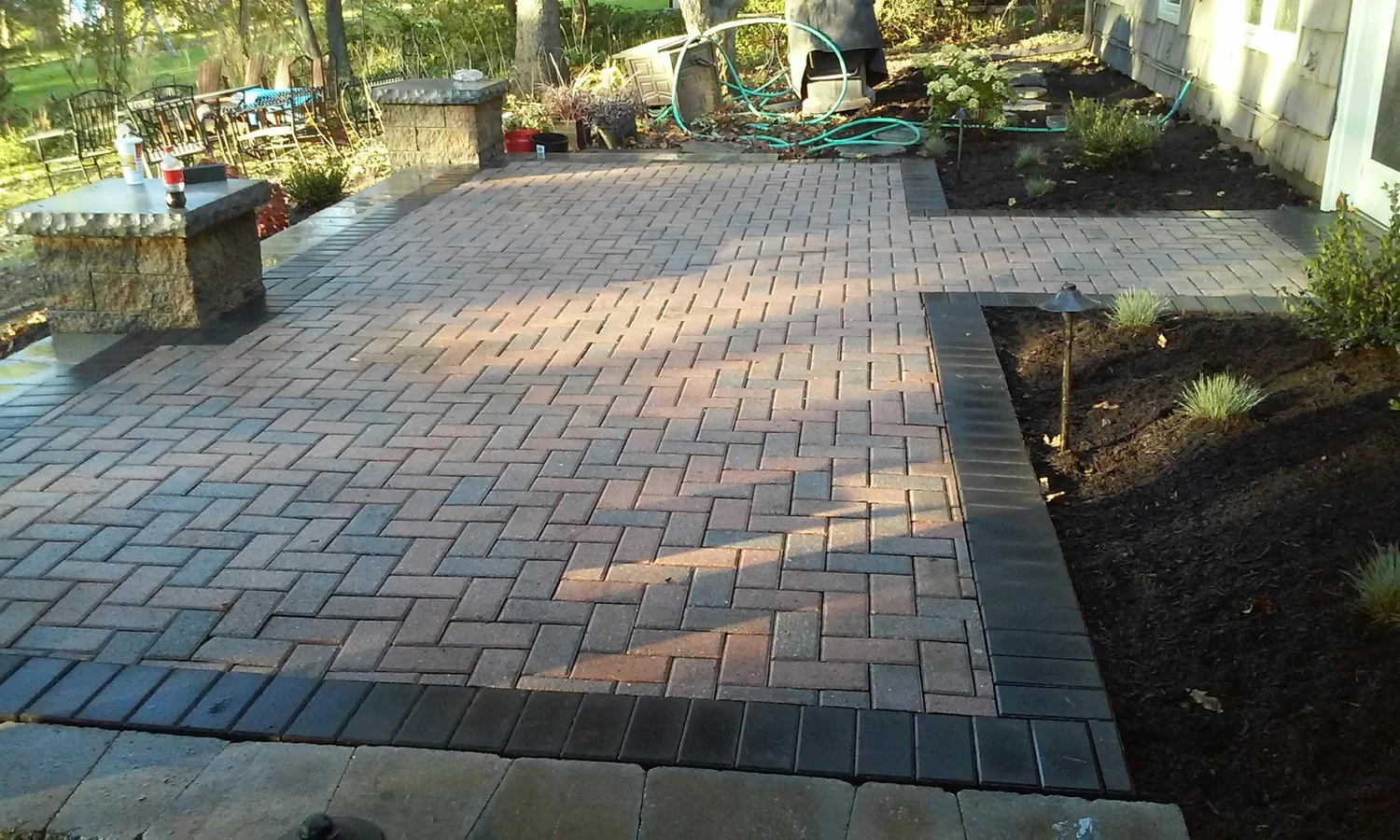
Why Pavers Need Maintenance in CNY
- Freeze–thaw cycles can shift pavers if water gets into the base.
- Joint sand washes out over time, letting pavers move and weeds grow.
- Salt and snow removal can scratch and stain the surface.
- Shade and moisture encourage moss and algae.
- Leaves, grills and planters leave tannin, grease and rust stains.
Cleaning Pavers the Right Way
Regular sweeping and a gentle rinse go a long way. For deeper cleaning:
- Use the right cleaner for the stain: grease, rust, organic stains and efflorescence each need different products.
- Be careful with pressure washers: too much pressure up close can etch the surface and blast the sand out of the joints.
- Re-sand after cleaning if joints have been opened up.
White haze on new pavers? That's usually efflorescence, a natural deposit that often fades on its own. It should be cleaned off before any sealer goes on, or the sealer can lock it in.
Re-Sanding with Polymeric Sand
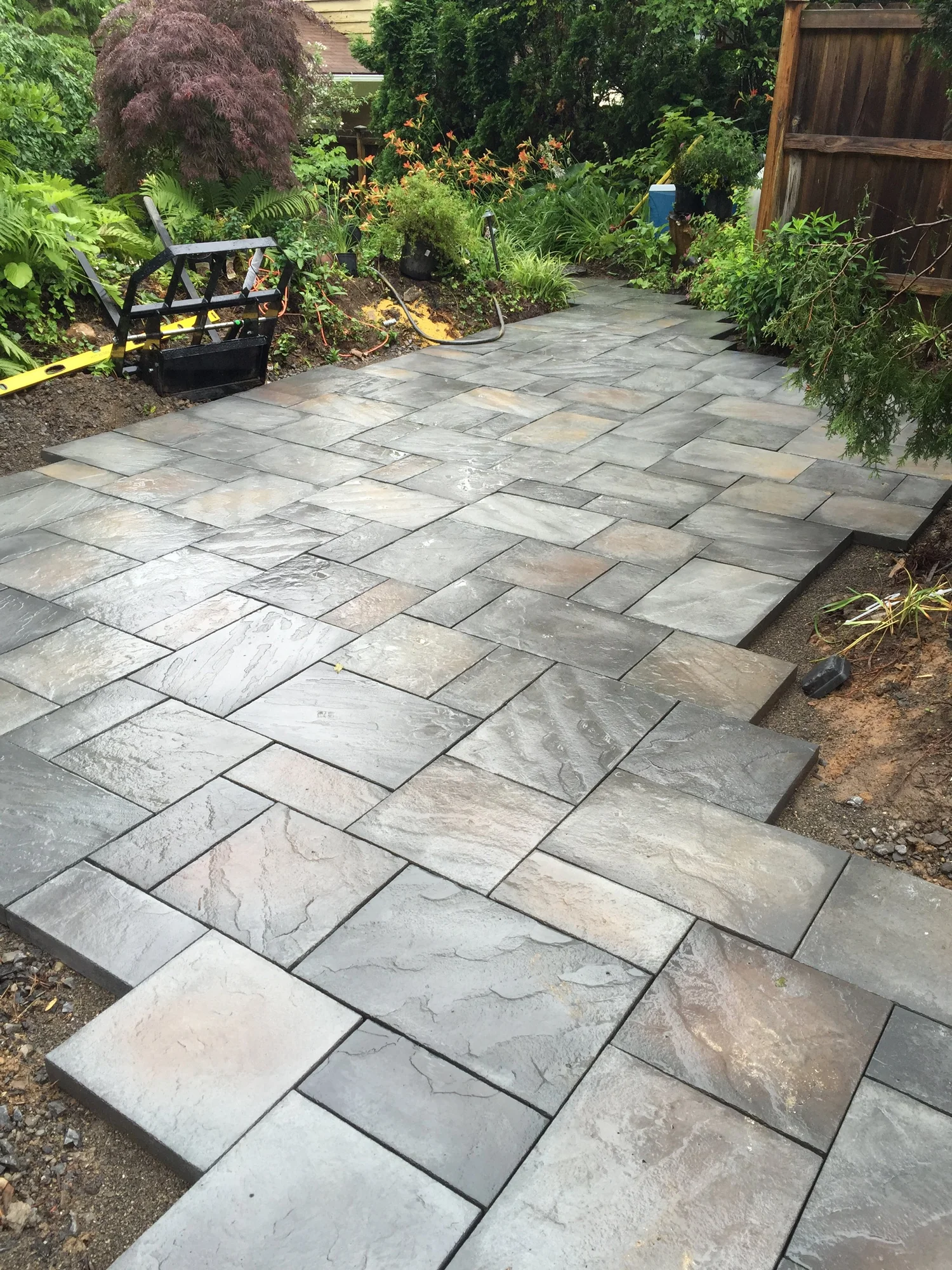
The sand in the joints is what locks pavers together. When it washes out, pavers can rock and shift, and weeds and ants move in. Polymeric sand hardens after it's wetted, holding pavers tighter and resisting weeds and washout better than regular sand. Re-sanding is often done together with cleaning and sealing.
Sealing Pavers
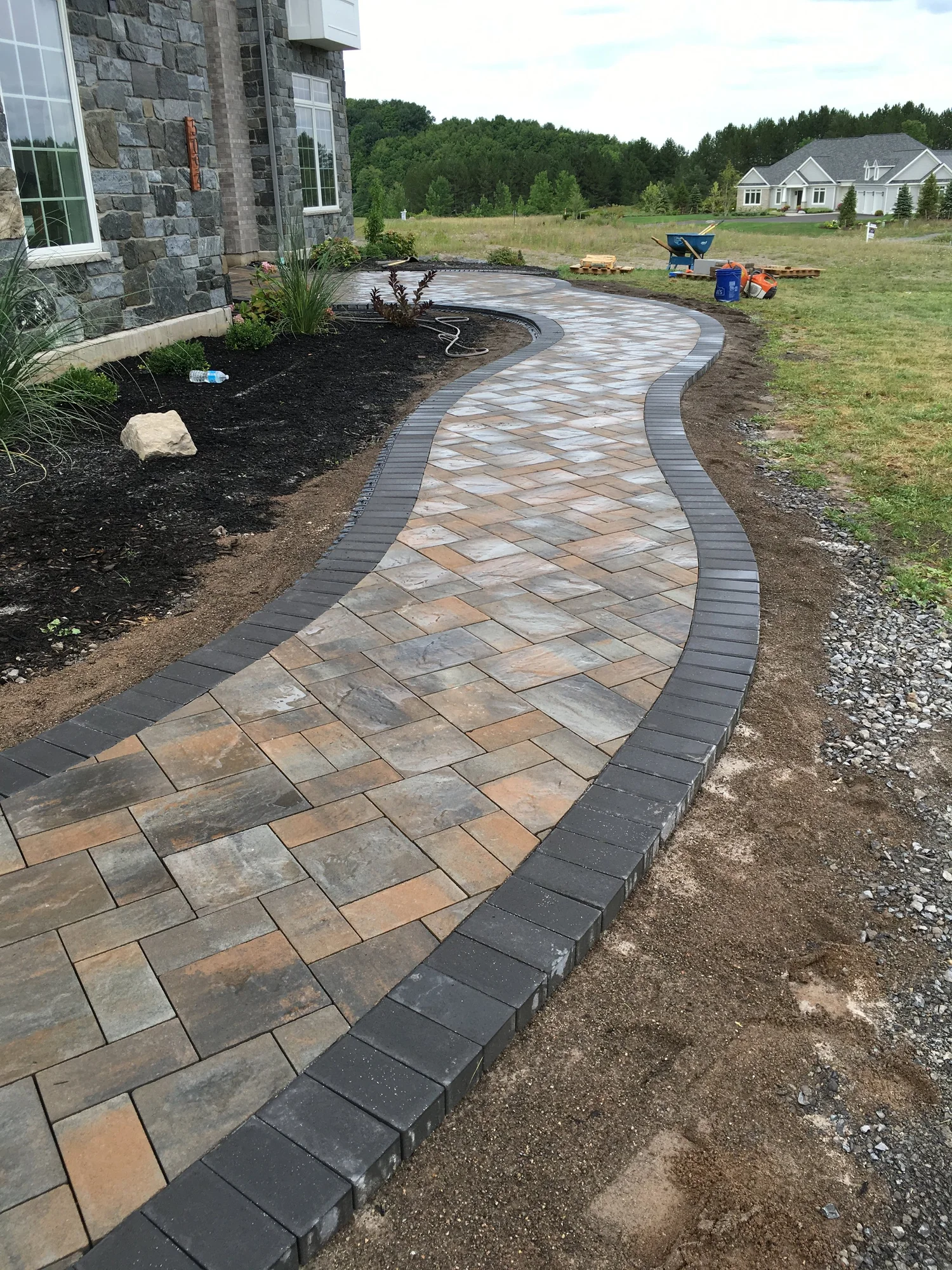
Sealing isn't required for every patio, but it has real benefits:
- Color: sealers can bring out the color, with a natural matte look or a richer "wet" look.
- Stain resistance: spills and grease are easier to clean before they soak in.
- Joint stabilization: some sealers help bind joint sand.
Most patios are resealed every few years, depending on the paver, sealer, sun and traffic. We'll recommend the right sealer and schedule for your hardscape.
Fixing Settled or Uneven Pavers
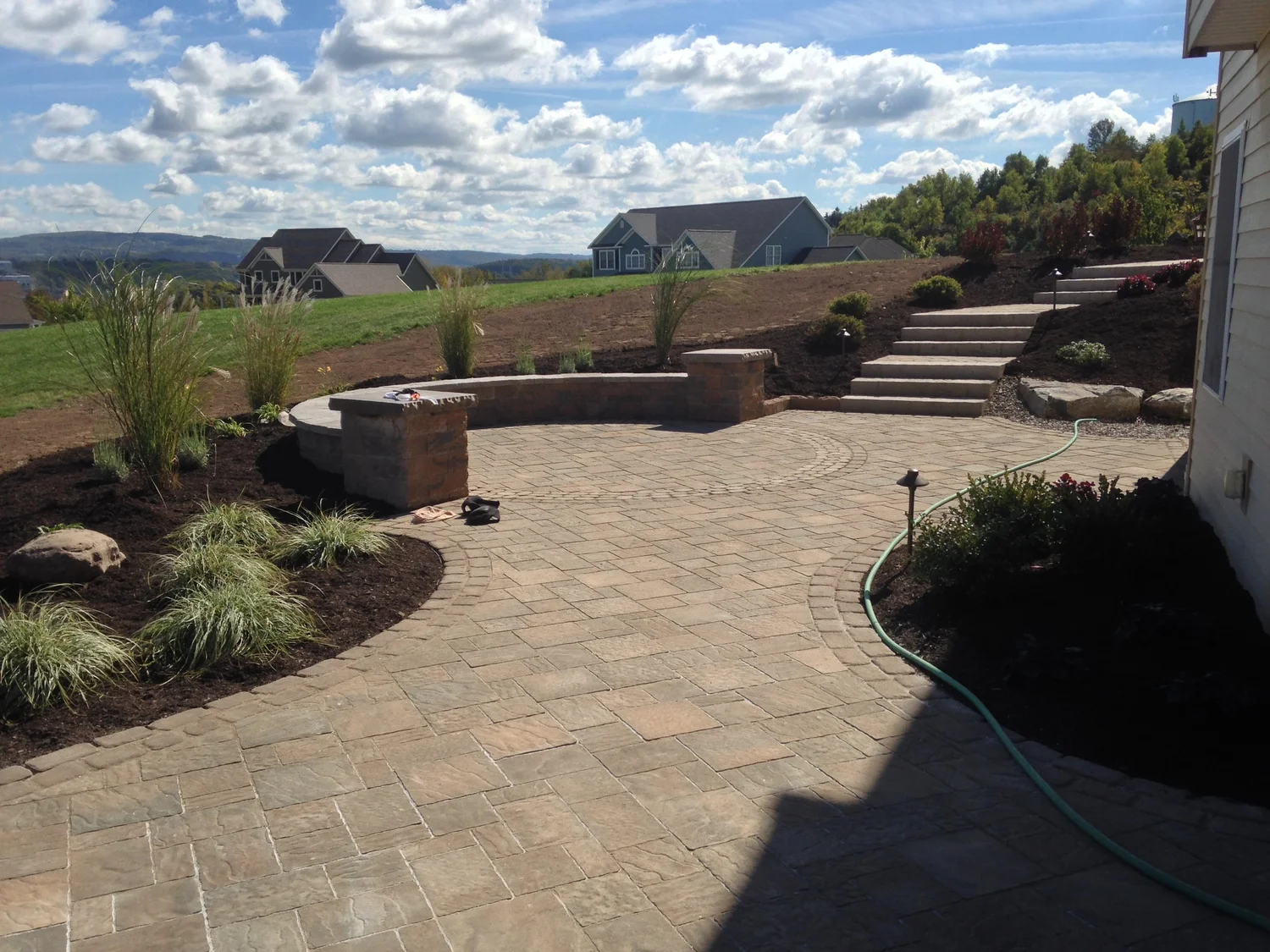
Settled, sunken or heaved pavers are trip hazards and can hold water. The good news: pavers can be lifted, the base corrected and the same pavers reset, with no patching. The key is fixing the cause, which is often a downspout dumping water onto the patio, poor drainage or a base that wasn't compacted properly. We also repair retaining walls, re-secure loose wall caps and restore natural stone and masonry.
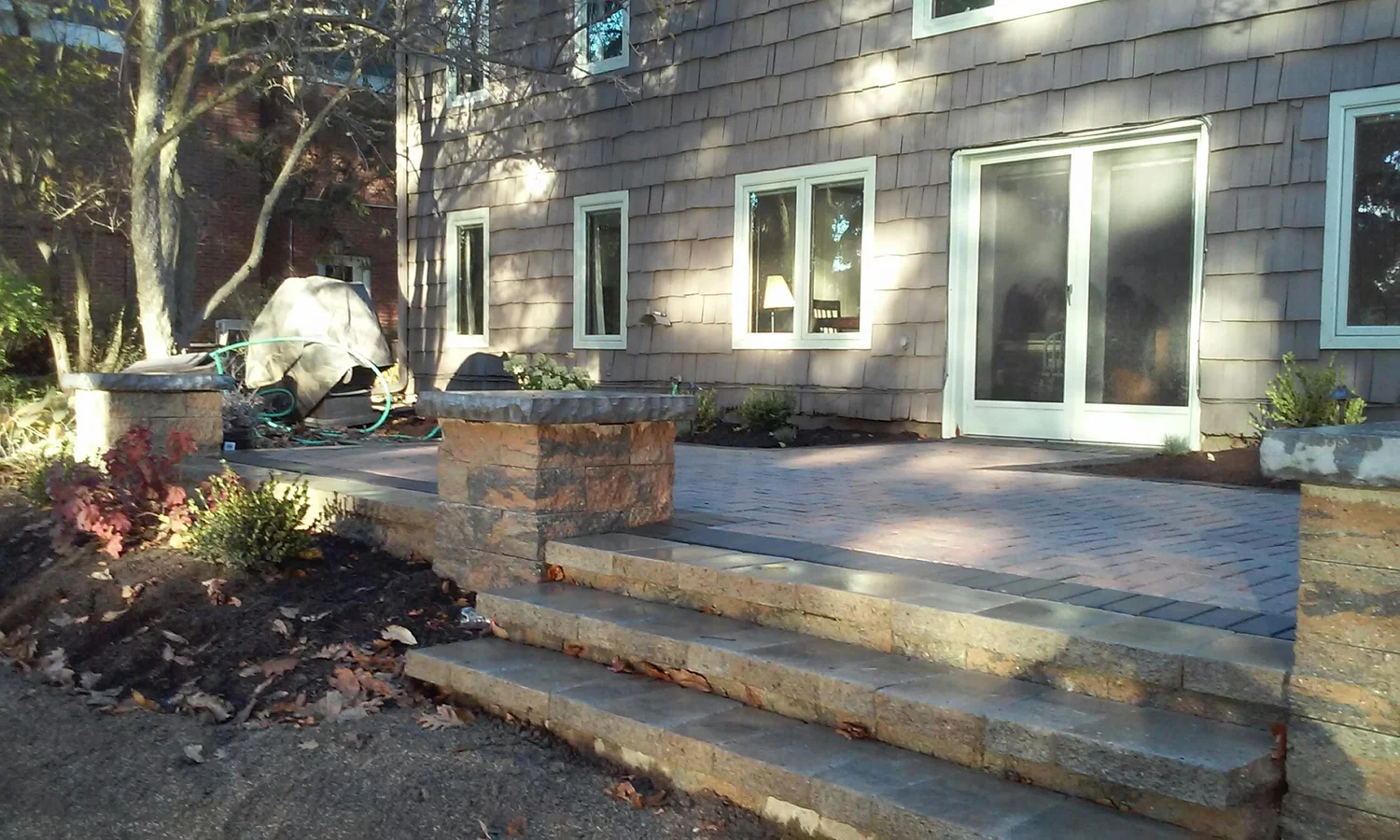
Winter Care for Pavers
- Use plastic shovels or put plastic covers on plow and snow blower blades. Metal can scratch pavers and leave rust stains.
- Use de-icers carefully. Follow your paver manufacturer's guidance. Unilock, for example, says rock salt can be used sparingly but warns against magnesium-based products.
- Don't pile salty snow on plant beds and lawns next to the patio.
- Rinse in spring to wash off salt residue.
- Be extra careful with natural stone, which can be more sensitive than concrete pavers.
A Seasonal Checklist
| Season | To do |
|---|---|
| Spring | Rinse off salt, check for settled areas, top up or replace joint sand |
| Summer | Sweep, pull weeds early, clean grill and planter stains quickly |
| Fall | Clear leaves before they stain, check downspouts and drainage |
| Winter | Plastic shovels, de-icer used sparingly, keep drains clear |

Our Hardscape Maintenance Service
Our hardscape maintenance is billed at $95 per man hour, including travel and time on site. We repair retaining walls, concrete pavers, natural stone and masonry, including cleaning and sealing pavers, repairing settled or failed pavers and walls, and installing polymeric sand. We also offer landscape lighting maintenance and spring and fall clean-ups. See our maintenance contracts page for details, and our guides to paver patio cost and hardscaping in Syracuse.
Frequently Asked Questions
How often should pavers be sealed?
It depends on the paver, the sealer, sun exposure and traffic. Many patios are resealed every few years. We look at how your pavers and joints are holding up and recommend a schedule.
What is polymeric sand?
Polymeric sand is joint sand mixed with binders that harden after it's wetted. It locks pavers together and resists weeds, ants and washout better than regular sand.
Can settled or sunken pavers be fixed?
Yes. One of the biggest advantages of pavers is that they can be lifted, the base corrected and the same pavers reset. It's important to fix the cause too, such as a downspout or drainage problem.
What is the white haze on my new pavers?
That's usually efflorescence, a natural white deposit that can appear on new concrete products as salts work their way to the surface. It typically fades over time and can be cleaned with a product made for efflorescence before sealing.
Can I use salt on my pavers in winter?
Follow your paver manufacturer's guidance. Unilock, for example, says rock salt can be used sparingly but warns that magnesium-based products can damage paver surfaces. Use a plastic shovel or plastic blade covers to avoid scratches and rust stains.
Related Services
Bring Your Patio Back to Life
Cleaning, sealing, re-sanding and repairs for pavers, walls and natural stone across Central NY.
Request Free ConsultationOr call 315-751-0540