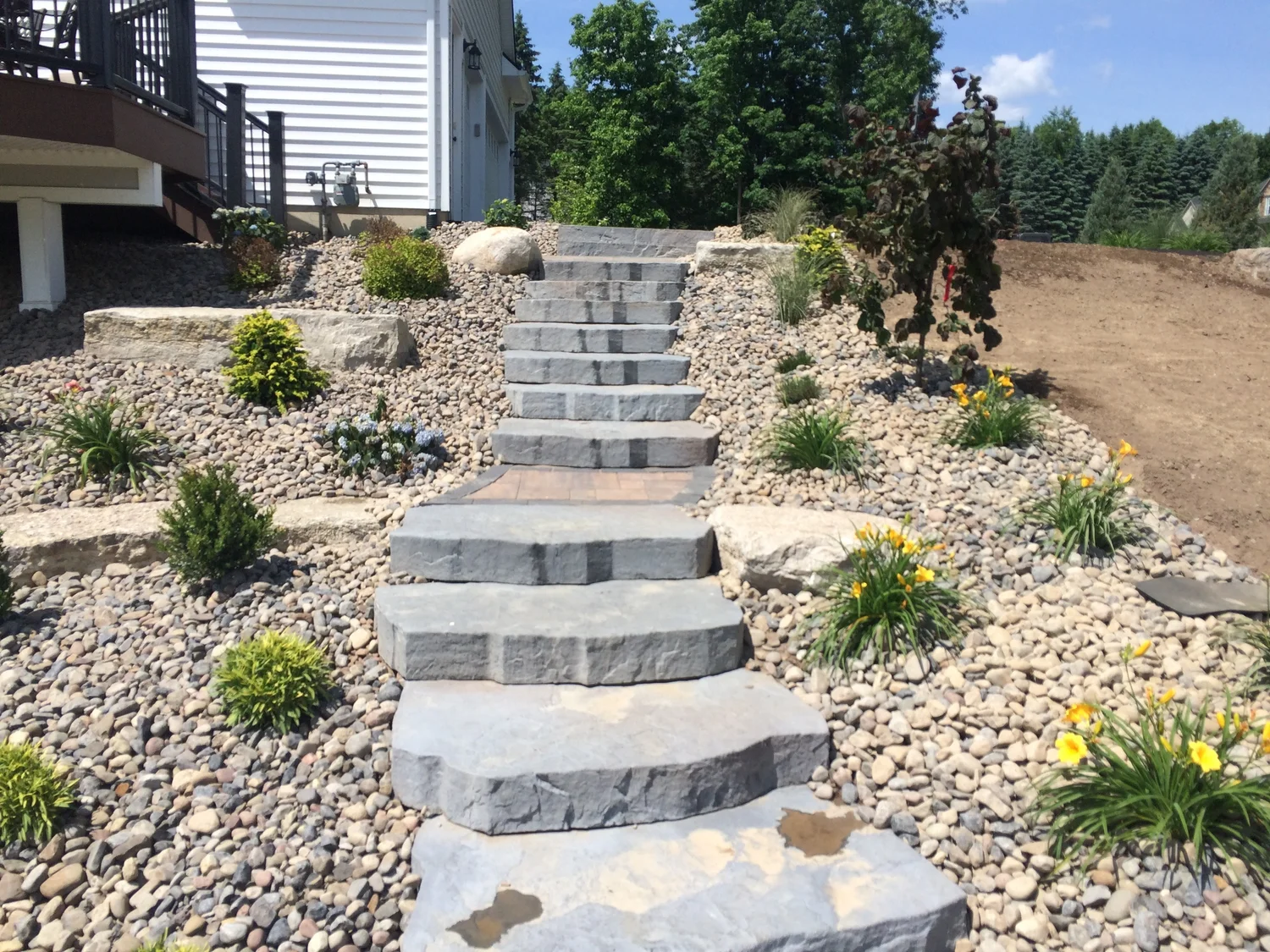
Many Central New York yards have a grade change somewhere: a slope down to the pool, a walkout basement, a front entry above the driveway. Well-built stone steps make that change easy to walk and turn it into one of the best-looking parts of the landscape.
Syracuse Lightscapes designs and builds natural stone steps in Syracuse and Central New York, often together with retaining walls, patios and walkways. Here's what goes into steps that look good and stay put.
- Where steps solve problems
- Choosing materials
- Getting the proportions right
- How we build steps that last
- Lighting your steps
- Typical costs
- Frequently asked questions
Where Steps Solve Problems
- Slopes and hillsides: a series of steps turns an unusable bank into a path. See our guide to steep slope landscaping.
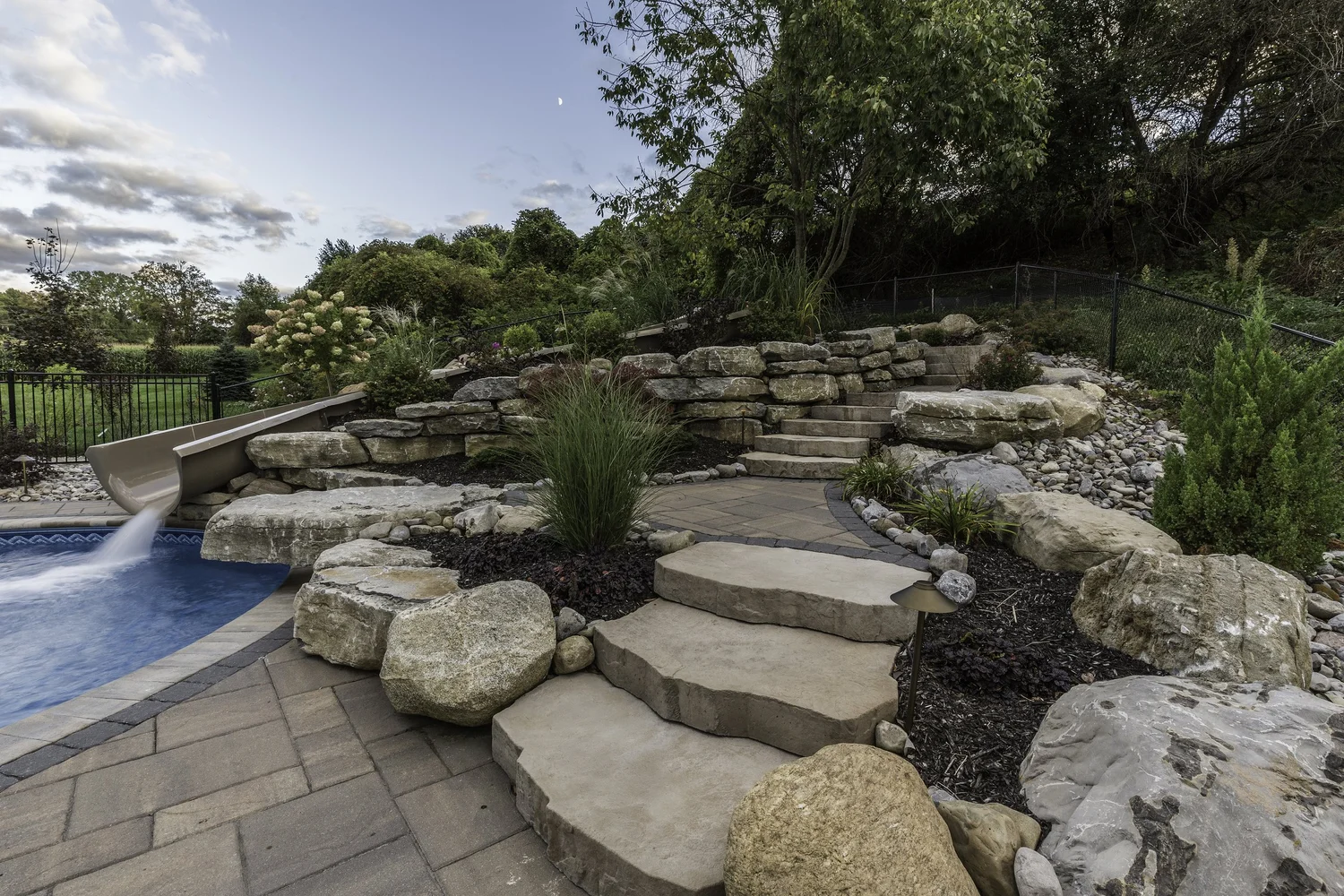
- Pool areas: steps connect a pool deck to the yard or patio above it.
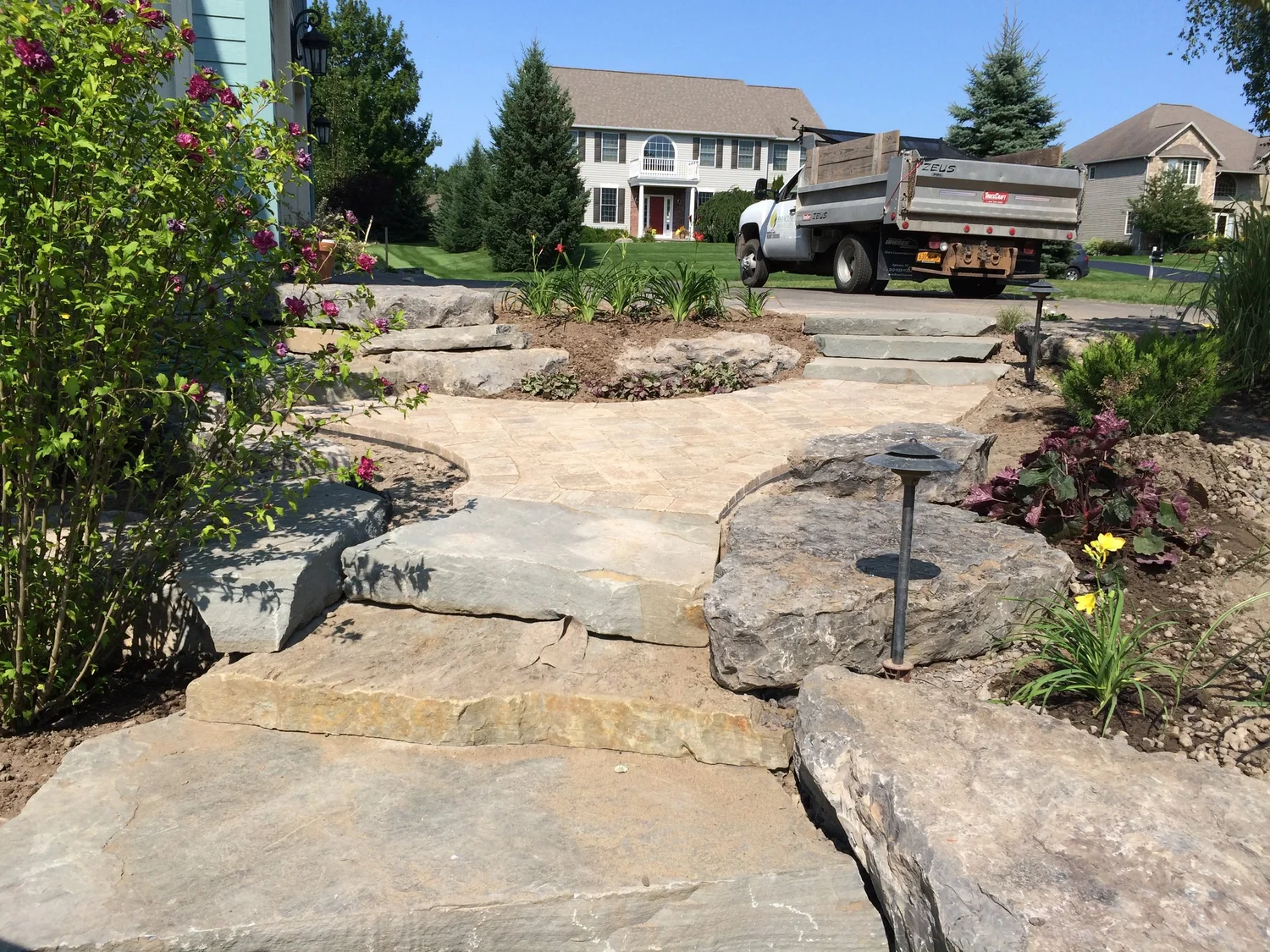
- Front entries: wide, comfortable steps make a strong first impression.
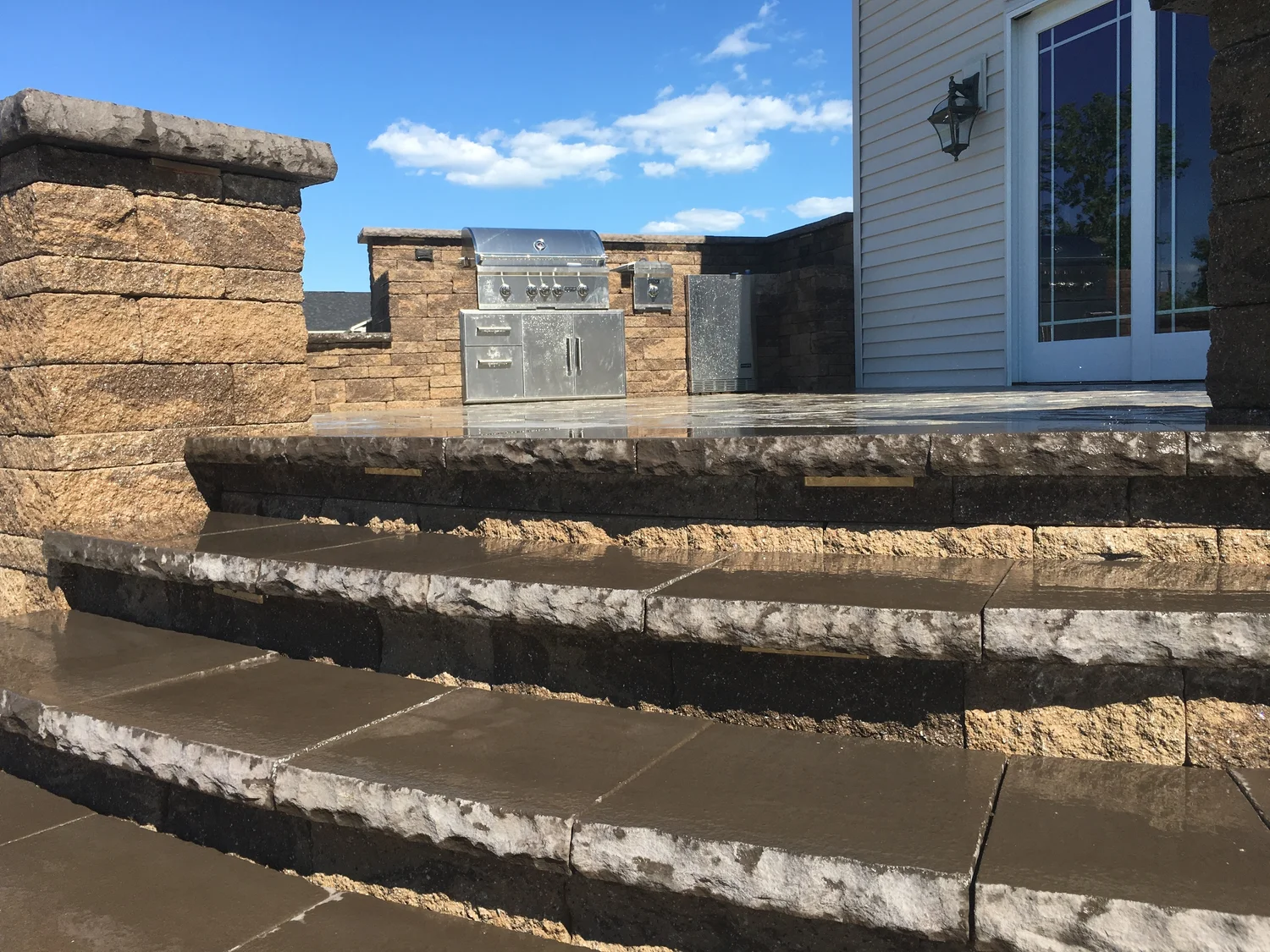
- Patio levels: steps link raised patios, walkouts and lawns.
Choosing Materials
| Material | Look | Good to know |
|---|---|---|
| Natural stone slab steps | Rugged, natural, each one unique | Single heavy pieces; very durable; suits slopes and natural landscapes |
| Cut or stacked stone | Refined and traditional | Pairs well with stone walls and masonry |
| Block and paver steps | Clean and consistent | Matches manufactured walls and paver patios |
Getting the Proportions Right
Outdoor steps should feel relaxed: lower and deeper than indoor stairs. A long-standing landscape rule of thumb says twice the riser height plus the tread depth should equal about 26 inches.
| Riser height | Tread depth |
|---|---|
| 5 inches | 16 inches |
| 6 inches | 14 inches |
| 7 inches | 12 inches |
- Keep every step the same. Even a small difference in height from one step to the next can trip people.
- Add landings on long runs so the climb feels easy.
- Go wide where people walk side by side, such as front entries and patio steps.
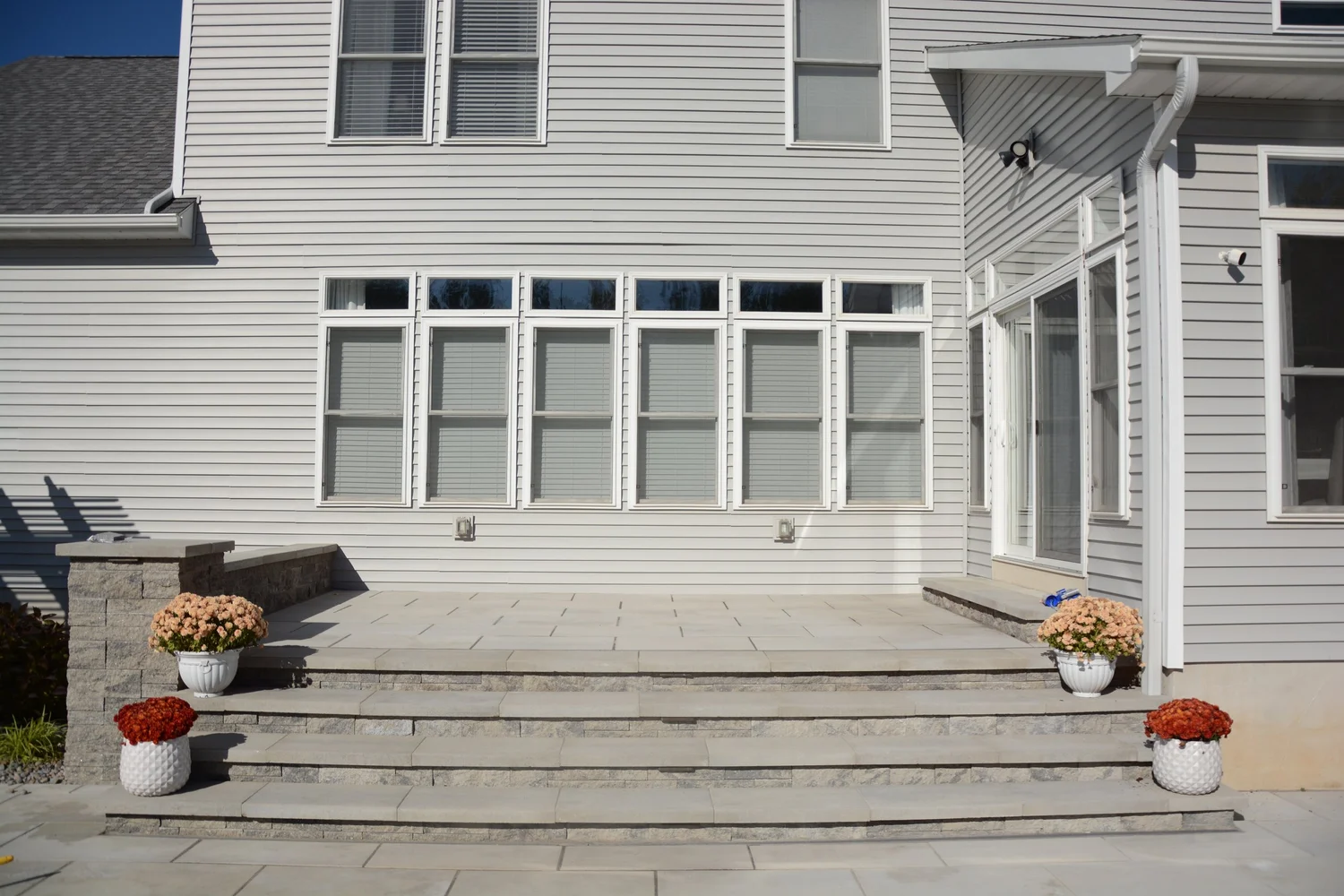
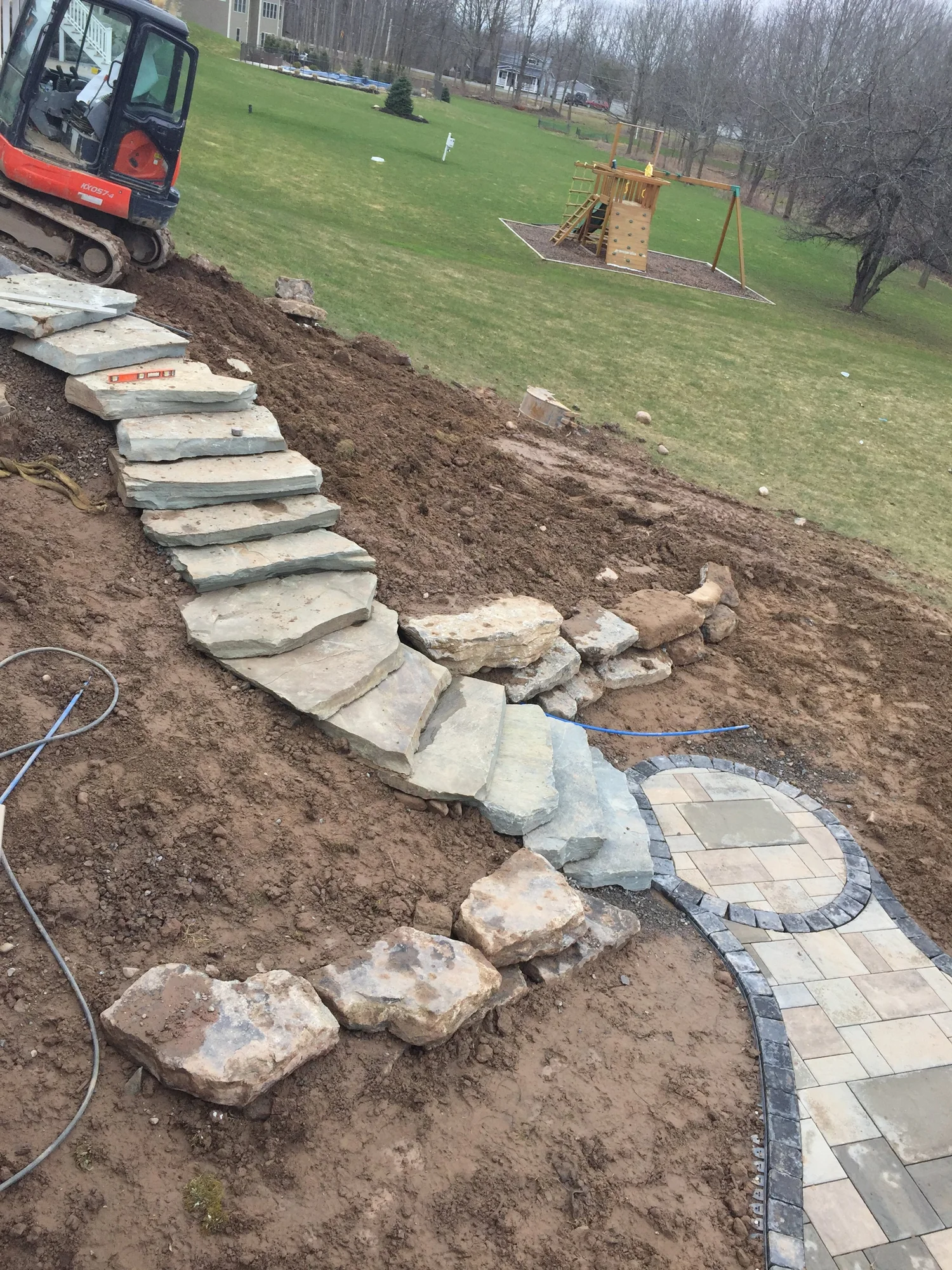
How We Build Steps That Last
- Layout: we measure the total rise and run and work out equal step heights.
- Excavation and base: each step sits on a compacted, well-drained base so it doesn't settle or heave in freeze-thaw cycles.
- Setting the stone: heavy slab steps are set with equipment and seated firmly, each one supported by the step below.
- Drainage: treads get a slight pitch so water runs off instead of pooling and freezing.
- Tying in: steps are connected to the walls, walkways and patios around them.
Our team includes ICPI, NCMA, Belgard Authorized and Techo-Pro certified installers. Learn more about our stone masonry work.
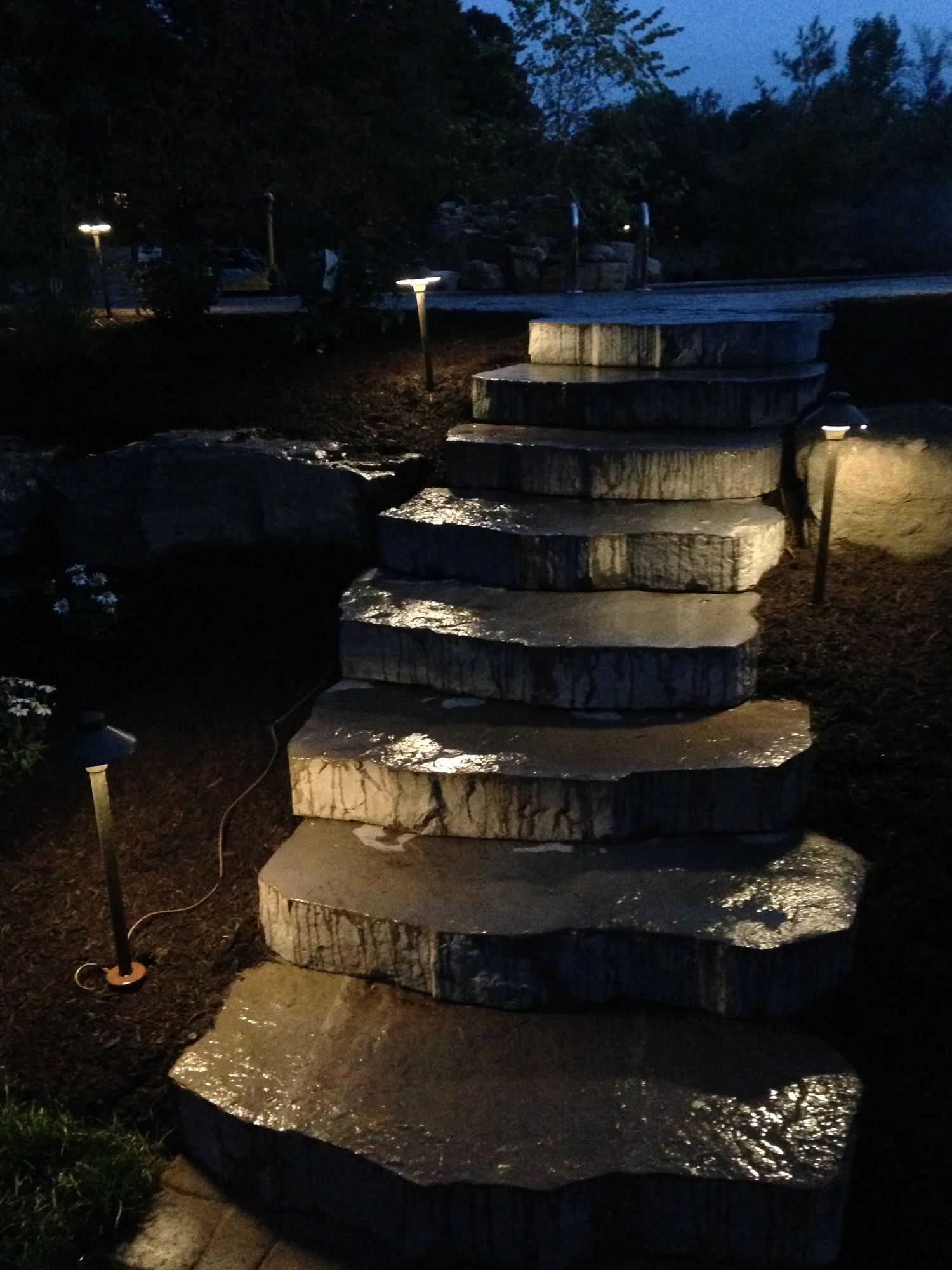
Lighting Your Steps
Steps are one of the most important places to light in a landscape. Low-voltage path lights and step lights make them safe at night and show off the texture of the stone. Plan conduit before the steps go in. Read our guide to low-voltage landscape lighting.
Typical Costs
Steps are usually priced as part of a larger walkway, patio or wall project. As typical ranges from our pricing FAQ:
| Project | Typical range |
|---|---|
| Walkways and front entrance hardscape | $5,000 to $50,000 |
| Boulder retaining walls | $40 to $70 per facial square foot |
| Segmental retaining walls | $40 to $80 per facial square foot |
| Driveway, path and tree lighting | $3,000 to $15,000+ |
See more in our guides to front yard landscaping and hardscaping.
Frequently Asked Questions
What is the best material for outdoor steps in Syracuse?
Natural stone slab steps are among the most durable choices, since each step is a single heavy piece of stone. Manufactured block and paver steps are also a good option when they need to match a patio or retaining wall. Either way, a solid, well-drained base is what makes them last.
How tall should outdoor steps be?
Outdoor steps are usually lower and deeper than indoor stairs. A common rule of thumb is that twice the riser height plus the tread depth should equal about 26 inches, for example a 6-inch riser with a 14-inch tread. Every step in a run should be the same height.
How much do stone steps cost?
Steps are usually priced as part of a walkway, patio or retaining wall project. As typical ranges from our pricing FAQ, walkways and front entrance hardscapes run $5,000 to $50,000, and boulder retaining walls run $40 to $70 per facial square foot.
Can stone steps be lit at night?
Yes. Low-voltage path lights and step lights make steps safer after dark and show off the stone. Conduit is easiest to plan before the steps are installed.
How do I care for stone steps in winter?
Shovel with a plastic shovel to avoid scratching the stone, keep the steps clear of ice, and use de-icers sparingly. Steps set on a well-drained base resist heaving through freeze-thaw cycles.
Related Services
Plan Your Stone Steps
Turn a slope or grade change into a feature. Request a design consultation with our team.
Request Free ConsultationOr call 315-751-0540