A pool gets you through the summer. A hot tub gets you through the other nine months. In a city that averages well over 100 inches of snow a year, a warm soak under the stars may be the best way to enjoy a Central New York winter.
Syracuse Lightscapes designs and builds hot tub and spa areas in Syracuse and Central New York, from a compact two-person spa tucked into a patio corner to a large in-ground spa built into a pool deck. Here's how to plan one you'll use all year.
- Portable hot tub or in-ground spa?
- Building the right base
- Placement for Central NY winters
- Privacy and shelter
- Lighting and atmosphere
- Electrical, permits and safety
- Winter hot tub care
- Frequently asked questions
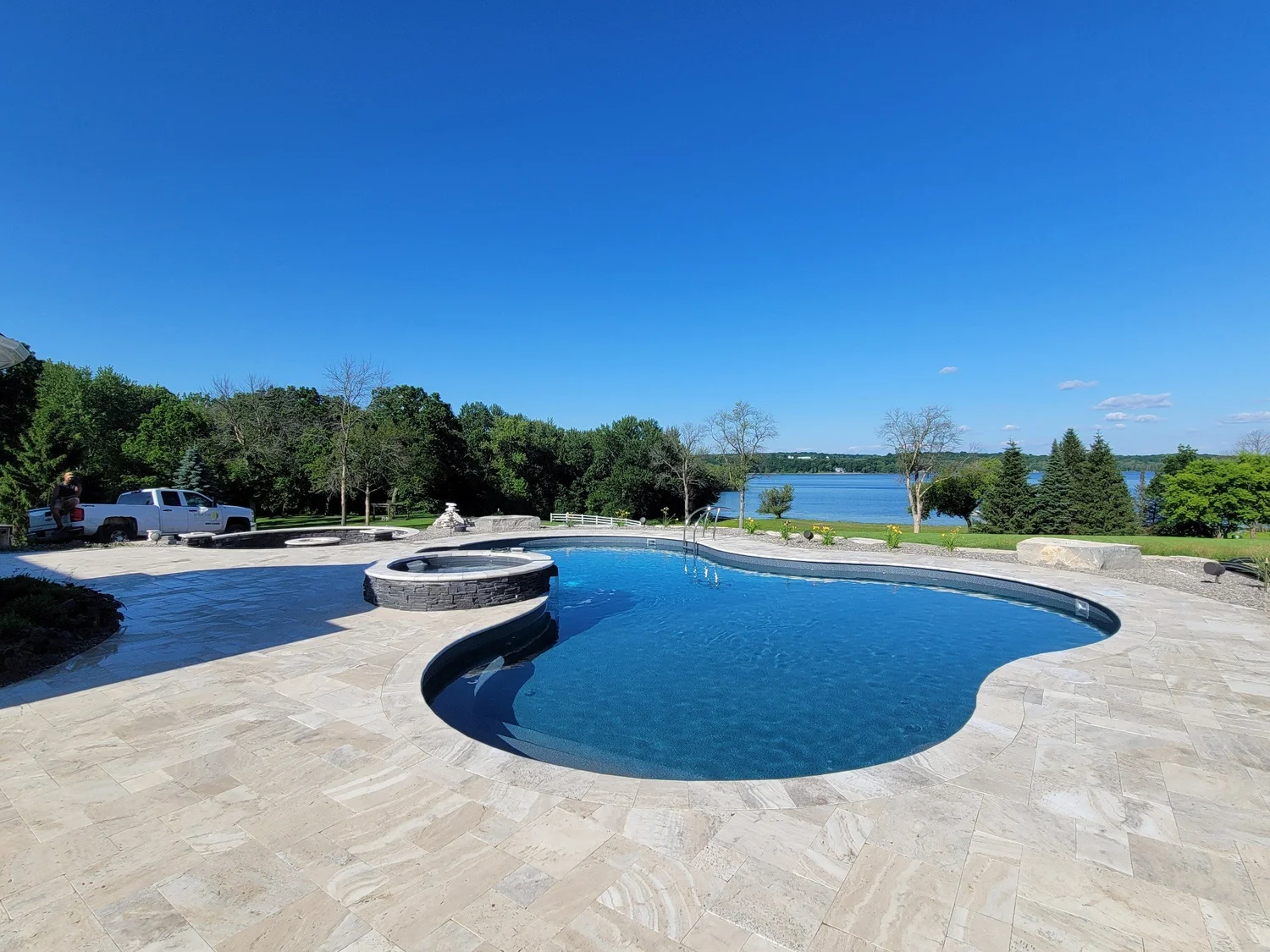
Portable Hot Tub or In-Ground Spa?
| Portable (self-contained) hot tub | Custom in-ground spa | |
|---|---|---|
| Look | Sits on a patio or deck, can be framed with stone or a step surround | Fully built-in, often with stone or paver coping |
| Upfront cost | Typically lower | Typically higher |
| Install time | Faster, once the base and electrical are ready | Built as part of a pool or patio project |
| Best for | Adding a hot tub to an existing yard | New pools and complete backyard designs |
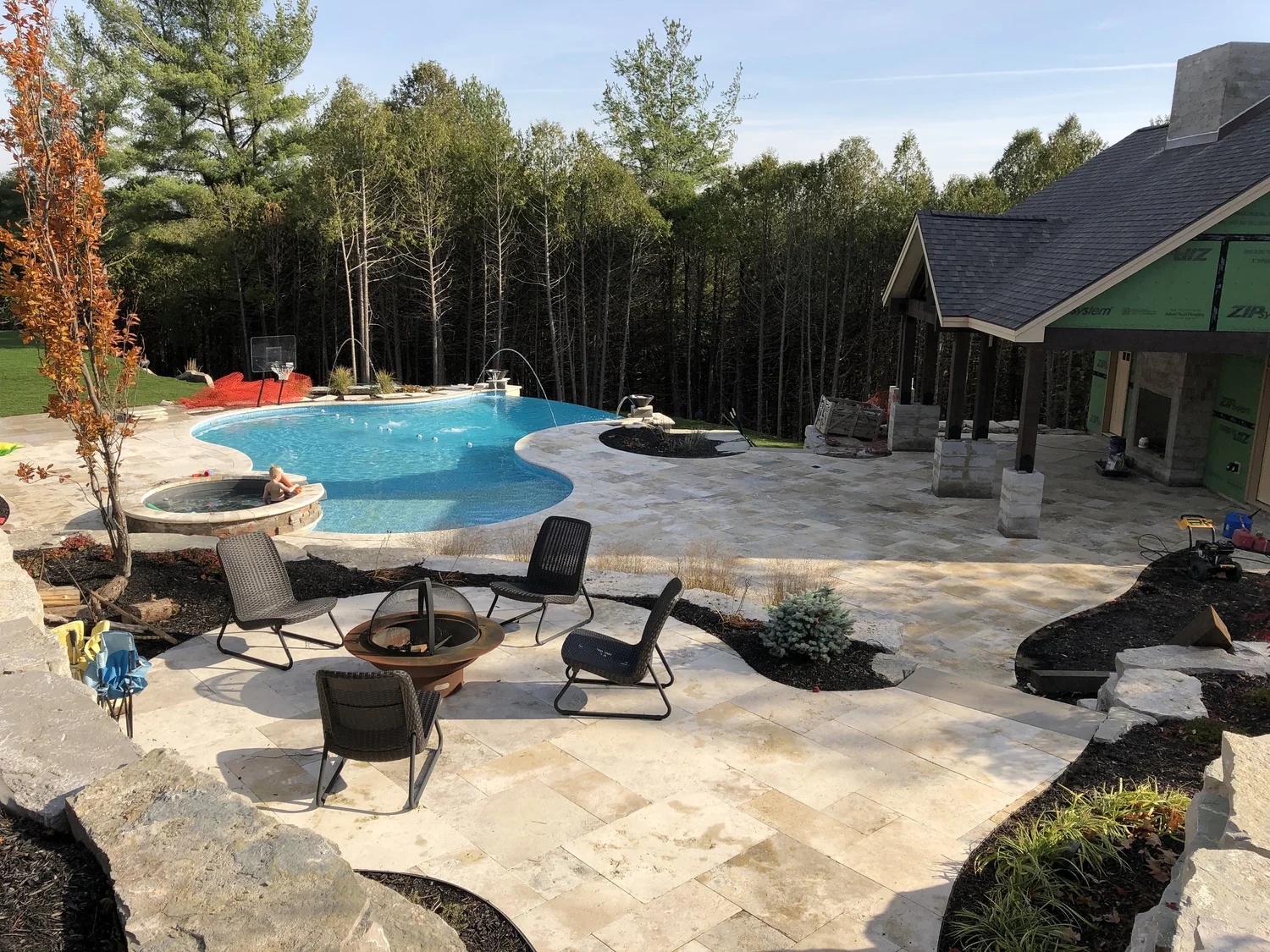
Many pool owners choose an attached spillover spa, where warm water spills over a stone edge into the pool. It looks beautiful, sounds relaxing and lets you use the spa long after the pool season ends. Read our guide to planning an in-ground pool.
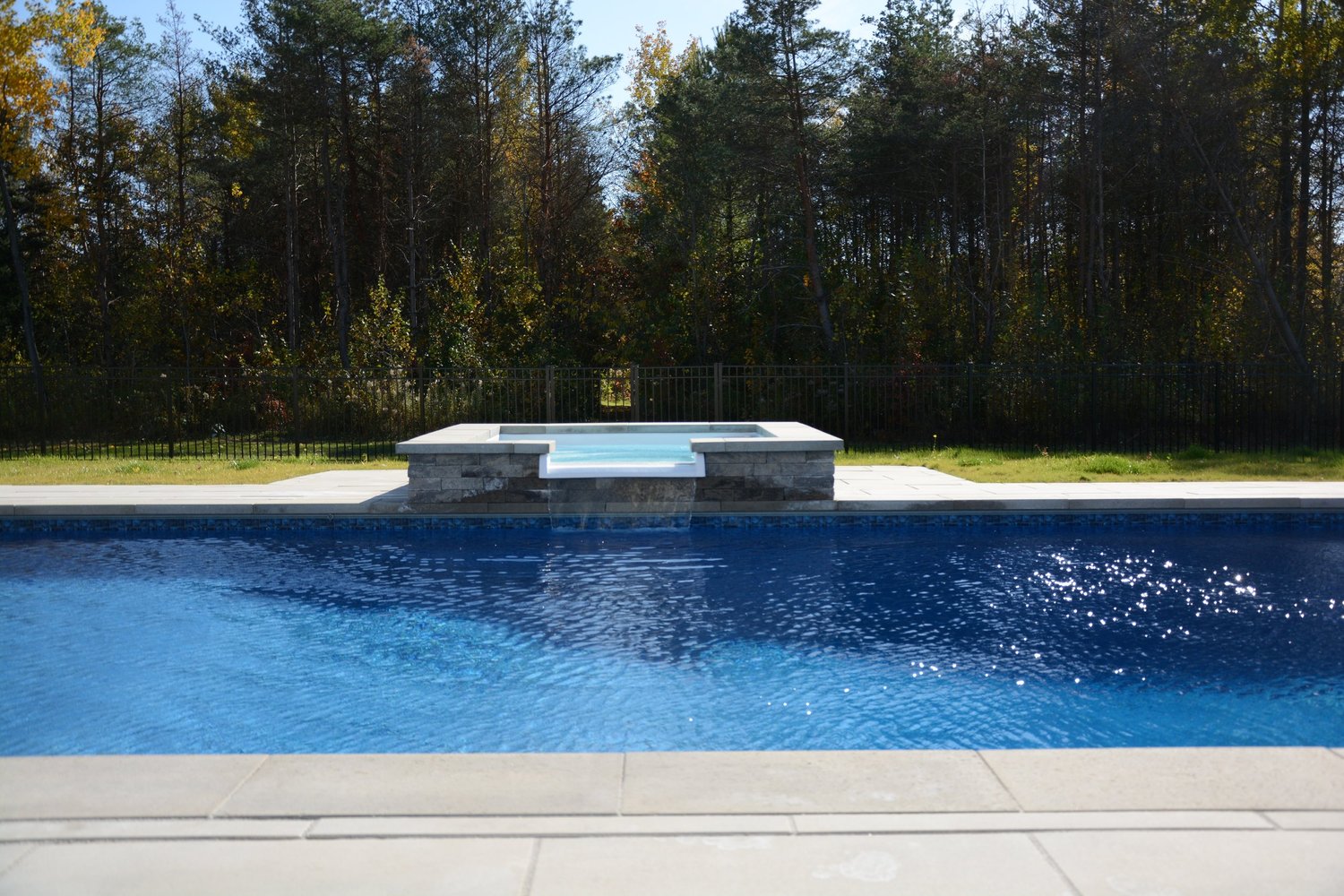
Building the Right Base
A filled hot tub with people in it can weigh several thousand pounds. Water alone weighs about 8.3 pounds per gallon. The base must be level, solid and built for that load, or the tub can settle, crack or void its warranty.
- Reinforced concrete pad: a common, sturdy option for portable tubs.
- Paver patio: works well when built over a properly excavated and compacted base, and it blends the tub into your patio design.
- Decks: must be engineered for the weight. Never set a hot tub on an existing deck without checking its structure.
Check the manual first: Hot tub manufacturers publish base requirements. We build to those specifications so your warranty stays protected.
Placement for Central NY Winters
- Keep it close to the house. A short walk matters when it's 15°F outside.
- Plan a safe, clear path with slip-resistant pavers or stone, and think about where you'll shovel snow.
- Avoid roof lines where snow and ice slide off, and spots where snow drifts.
- Stay clear of messy trees that drop leaves, needles or seeds into the water.
- Plan for delivery: measure gates and paths, since a portable tub needs a clear route into the yard.
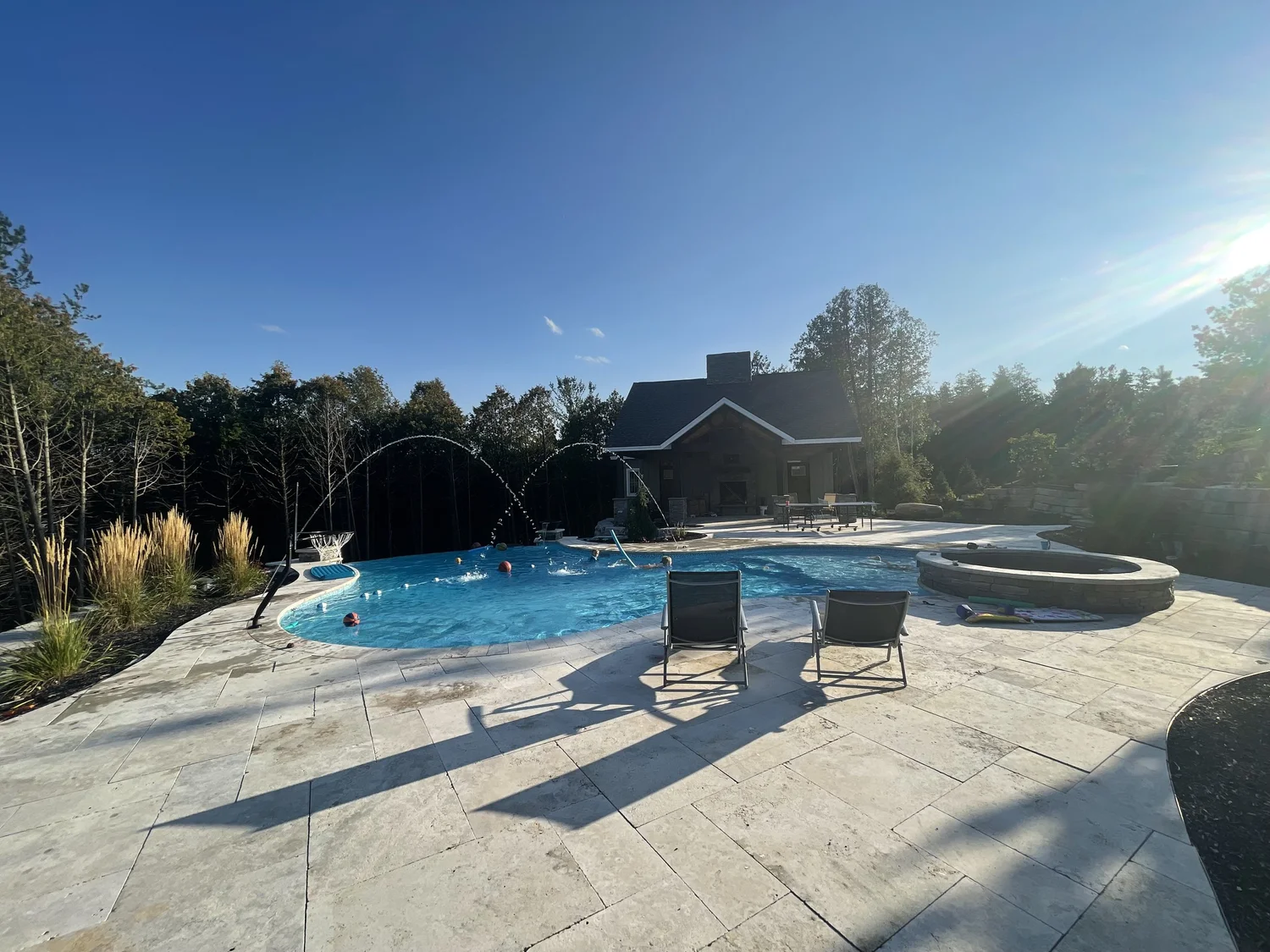
Privacy and Shelter
A hot tub feels best when it feels private. Evergreen plantings, a stone or masonry wall, privacy screens or a pergola can block views from neighbors and cut the winter wind. A covered pavilion keeps snow and rain off and makes the spa usable in any weather.
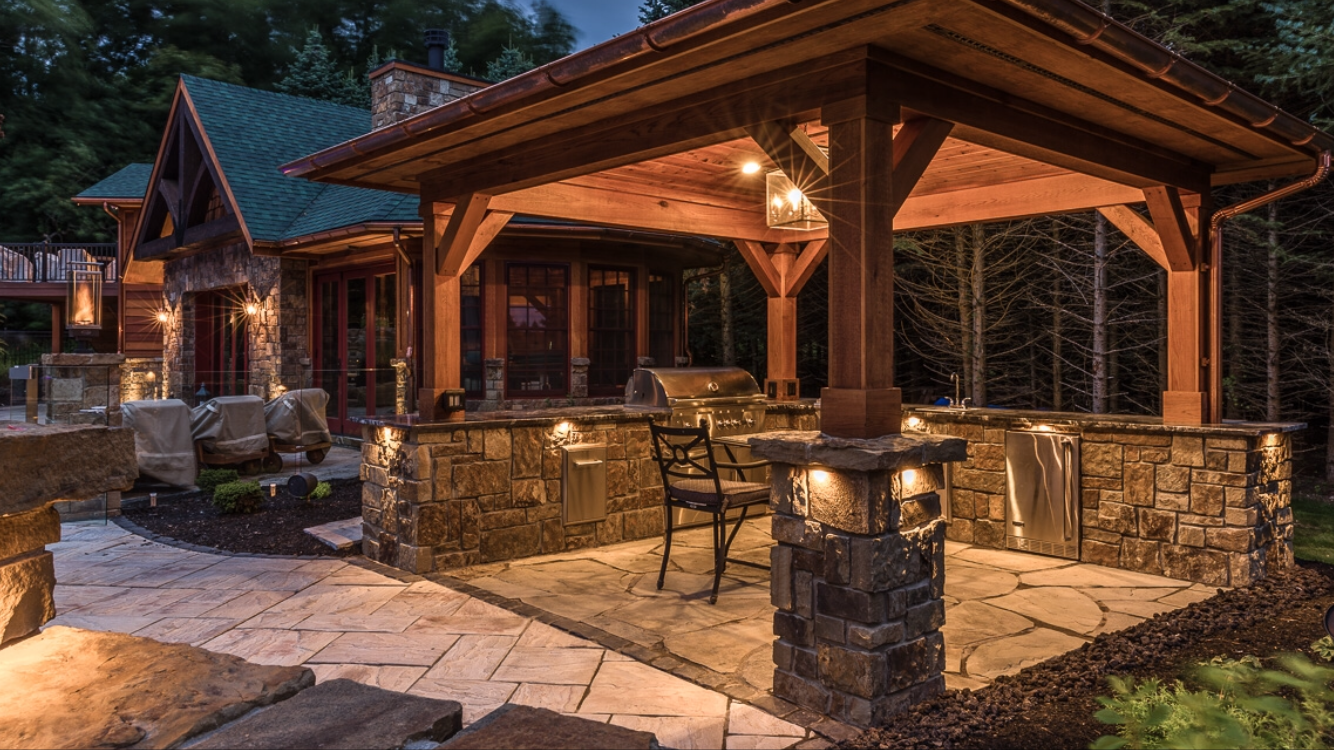
Lighting and Atmosphere
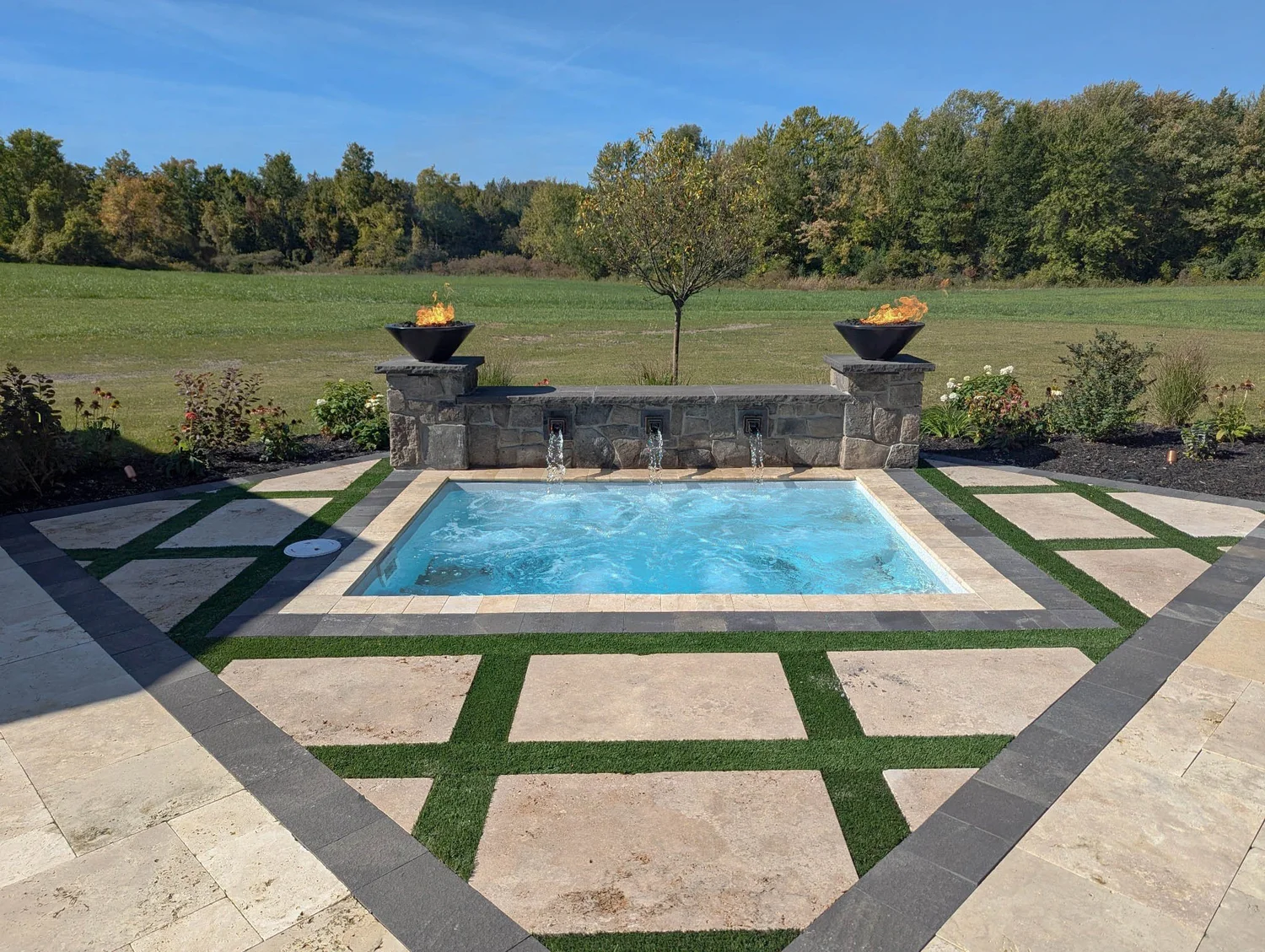
Most hot tub time happens after dark, so lighting matters. Step and path lights keep the walk safe, undercap lights on seating walls add a warm glow, and subtle uplighting on nearby trees creates a backdrop. A fire bowl or fire pit nearby makes the space feel even warmer. Learn more in our landscape lighting guide.
Electrical, Permits and Safety
Most full-size hot tubs need a dedicated electrical circuit with GFCI protection and a disconnect, installed by a licensed electrician to code. Requirements vary by town, but many installations need an electrical permit, and spas usually need either a code-compliant barrier or a lockable safety cover. We check local requirements and manage permits for our projects, so your spa is safe and legal from day one.
Caring for Your Hot Tub in Winter
- Keep the insulated cover on and locked between uses.
- Clear snow off the cover so it doesn't sag or tear.
- Keep water chemistry balanced, even when you use it less.
- Don't drain a tub in freezing weather unless it's properly winterized.
See more on our spas and hot tubs and pool decks pages.
Frequently Asked Questions
Can you use a hot tub in a Syracuse winter?
Yes. Many owners say winter is their favorite time to use a hot tub. Place it close to the house, keep a clear, well-lit path, and keep the insulated cover on between uses to hold heat.
What kind of base does a hot tub need?
A hot tub needs a level, solid base built for its full weight with water and people. Options include a reinforced concrete pad or a paver patio over a properly compacted base. Always follow the manufacturer's base requirements.
Do I need a permit for a hot tub?
Requirements vary by town. Many installations need an electrical permit, and spas usually need either a code-compliant barrier or a lockable safety cover. We check local requirements and handle permits for our projects.
Should I choose a portable hot tub or an in-ground spa?
A portable (self-contained) hot tub costs less and installs faster on a patio or deck. A custom in-ground spa, often attached to a pool with a spillover, looks fully built-in and becomes part of the landscape design.
How much does a hot tub area cost?
It depends on the tub, electrical work, base, privacy features and lighting. For custom pool projects, our typical range for spas, bubblers and laminar jets is $5,000 to $25,000, not including the surrounding patio and landscaping.
Related Services
Plan Your Hot Tub Retreat
From a cozy patio spa to a spillover spa built into your pool, we design and build hot tub areas across Central NY.
Request Free ConsultationOr call 315-751-0540