A new patio, retaining wall, pool deck or outdoor kitchen should last for decades. Whether it does depends far more on who builds it than on the pavers or stone you choose. In Central New York, where freeze–thaw cycles test every hardscape, picking the right landscape contractor is the most important decision you'll make.
Here are the questions we'd ask if we were hiring a landscape contractor in Syracuse, NY, along with the answers you should expect.
- Landscaper, contractor or design-build firm?
- 12 questions to ask
- Red flags to watch for
- What a good proposal includes
- How Syracuse Lightscapes works
- Frequently asked questions

Landscaper, Contractor or Design-Build Firm?
- Landscaper or lawn care company: mowing, mulching, cleanups and planting.
- Landscape contractor: builds patios, walls, walkways, drainage and plantings, often from someone else's plan.
- Design-build landscape contractor: designs the project and builds it with its own crews, so one team is responsible from the first sketch to the final walkthrough.
For anything beyond basic planting, such as a patio, pool, outdoor kitchen or retaining wall, a design-build firm keeps design, budget and construction aligned.
12 Questions to Ask a Landscape Contractor
1. Do you design and build, or only build?
If they only build, you'll need a separate designer, and any gaps between the plan and the build become your problem.
2. Will your own crews do the work, or subcontractors?
In-house crews mean consistent quality and clear responsibility. Ask who will actually be on site.
3. What certifications do your installers hold?
Look for ICPI and NCMA hardscape certifications (now combined as the Concrete Masonry & Hardscapes Association), manufacturer programs like Belgard Authorized Contractor and Techo-Pro, and an ISA Certified Arborist for tree work.
4. Can I see projects that are at least three years old?
Any patio looks good on day one. Projects that have been through several Syracuse winters show how well the base was built.
5. How deep do you excavate, and how do you compact the base?
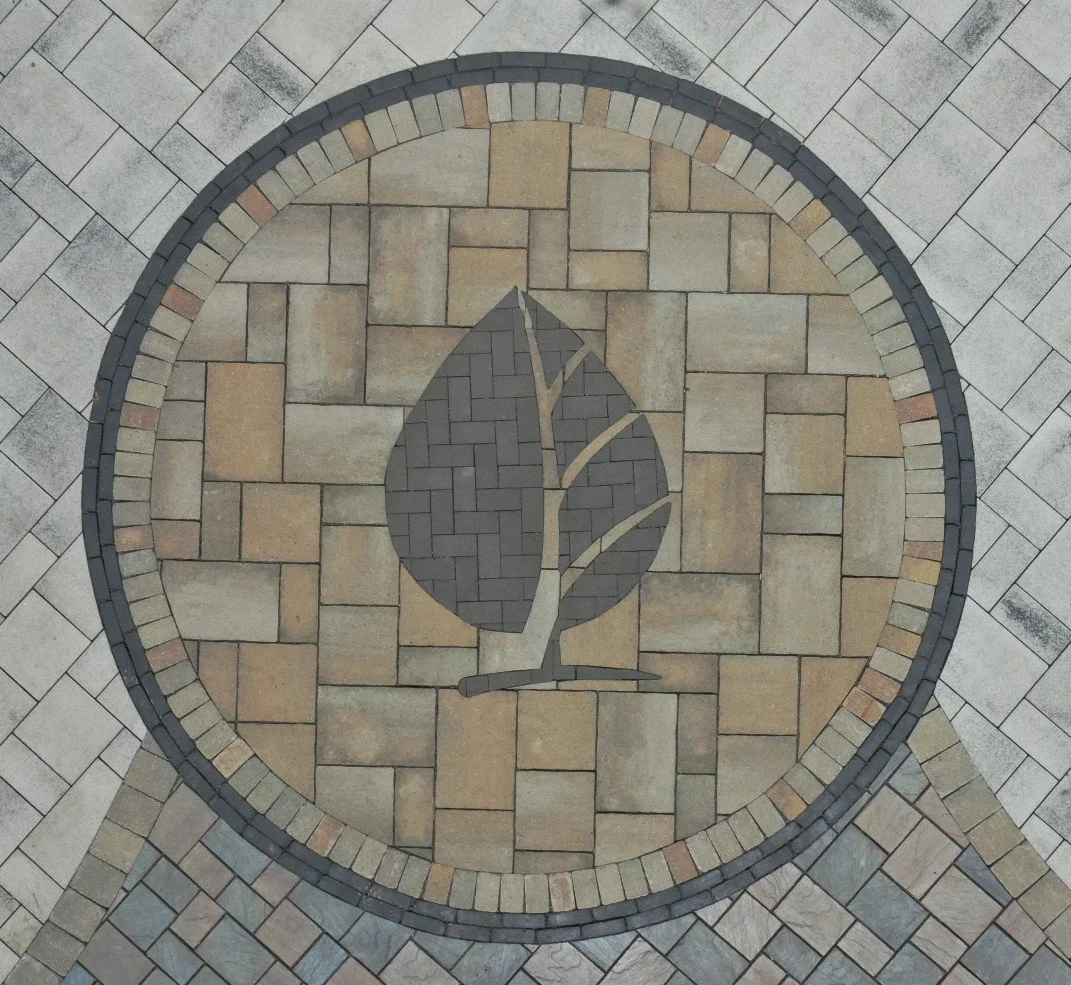
The answer should be specific: how many inches of gravel base, compacted in layers, with edge restraints. A thin base is the number one reason patios heave and settle.
6. How will you handle drainage?
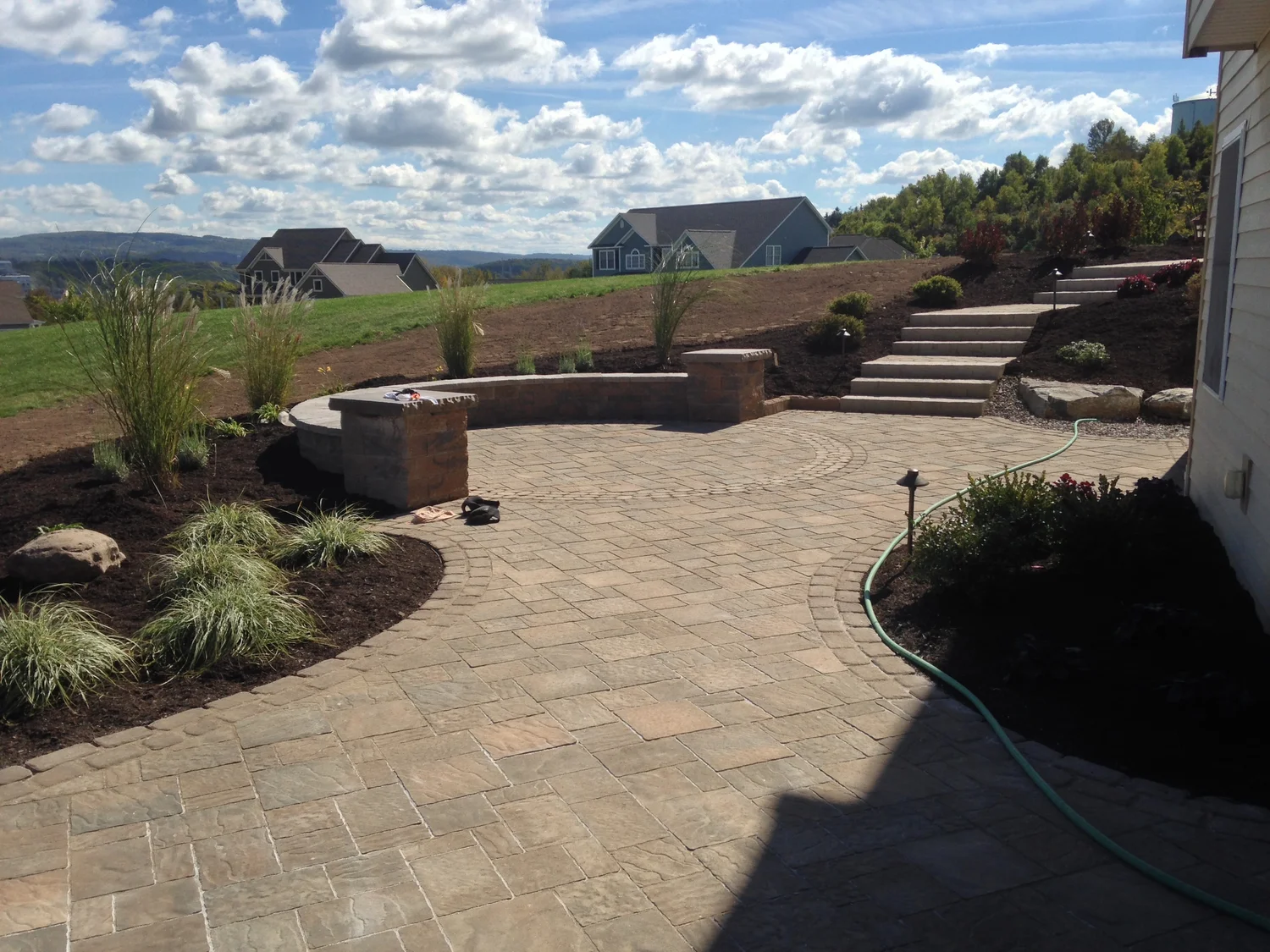
Water must move away from your house, patio and walls. Ask about grading, drainage stone behind walls and where downspouts will go.
7. Do you handle permits and engineering?
Pools, tall retaining walls and some grading projects need permits, stamped drawings or inspections. A good contractor manages this for you.
8. Are you insured?
Ask for a certificate of insurance showing liability and workers' compensation coverage before work begins.
9. Will I get a written contract with a detailed scope?
In New York, home improvement work, which state law defines to include patios, pools and landscaping, generally requires a written contract when the price exceeds $500.
10. What is the timeline, and when can you start?
Good contractors are booked ahead. A realistic start date is a better sign than "we can start Monday."
11. What warranty do you offer?
Ask what's covered, for how long, and how service calls are handled.
12. Can you add lighting, irrigation and maintenance?
Planning landscape lighting wiring and irrigation lines before the patio goes in avoids cutting into finished work later.
Red Flags to Watch For
- A one-line price with no scope, materials or base details
- Pressure to sign today or pay a large cash deposit
- No proof of insurance and no business address
- No photos of older, finished projects
- A bid far below the others with no clear explanation
What a Good Proposal Includes
| Section | What to look for |
|---|---|
| Scope | Every element listed: patio, walls, steps, plantings, lighting |
| Materials | Brand, style and color of pavers, stone and wall block |
| Site prep | Excavation depth, base material, compaction and drainage |
| Cost breakdown | Clear pricing, so you know where your investment goes |
| Schedule and warranty | Estimated start, duration and what's covered afterward |
How Syracuse Lightscapes Works
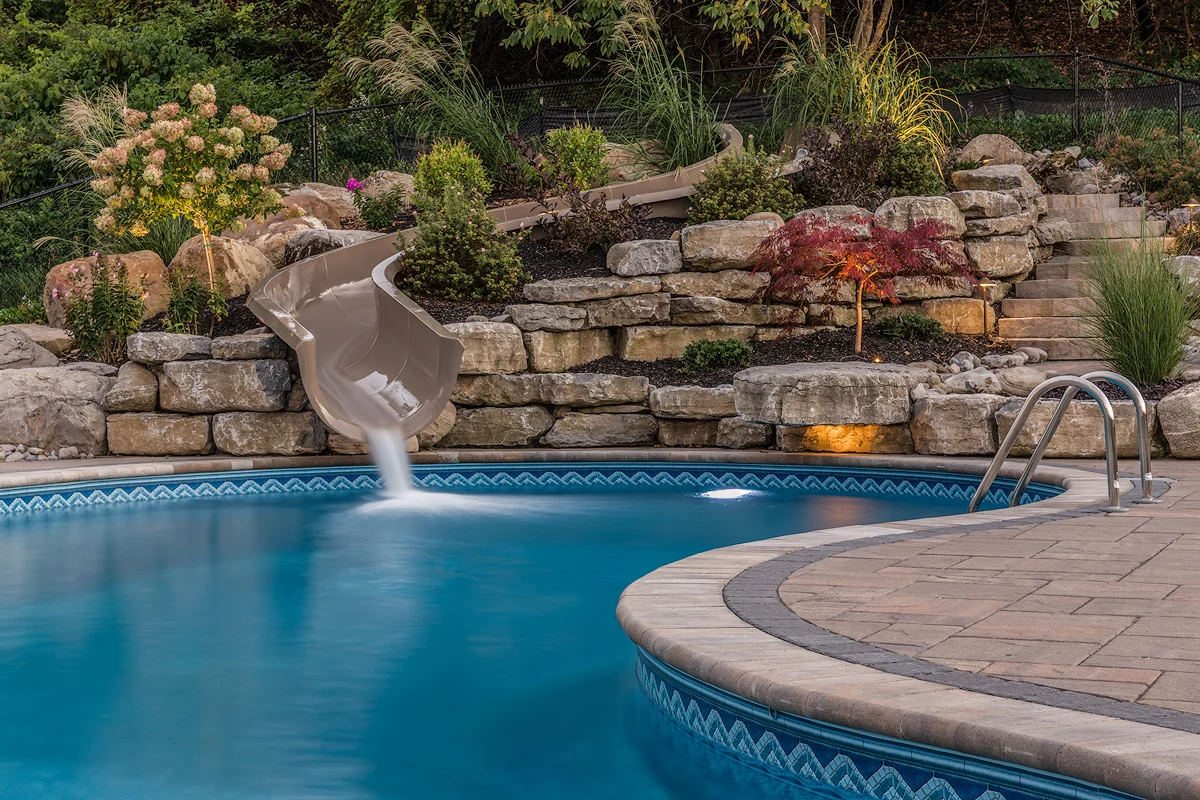
Since 2012, Syracuse Lightscapes has designed and built outdoor spaces across Syracuse, DeWitt, Fayetteville, Manlius, Cicero, Clay, Liverpool, Baldwinsville, Camillus, Skaneateles and Cazenovia. Our team includes ISA Certified Arborists, ICPI and NCMA certified installers, Belgard Authorized Contractors and Techo-Pro certified professionals, and our in-house crews bring hundreds of years of combined experience.
- Consultation and site visit
- Concept design with detailed plans and 3D renderings
- Budget proposal with a clear cost breakdown
- Permits and scheduling
- Construction by our certified, in-house crews
- Final walkthrough and warranty, with optional lighting and seasonal service plans
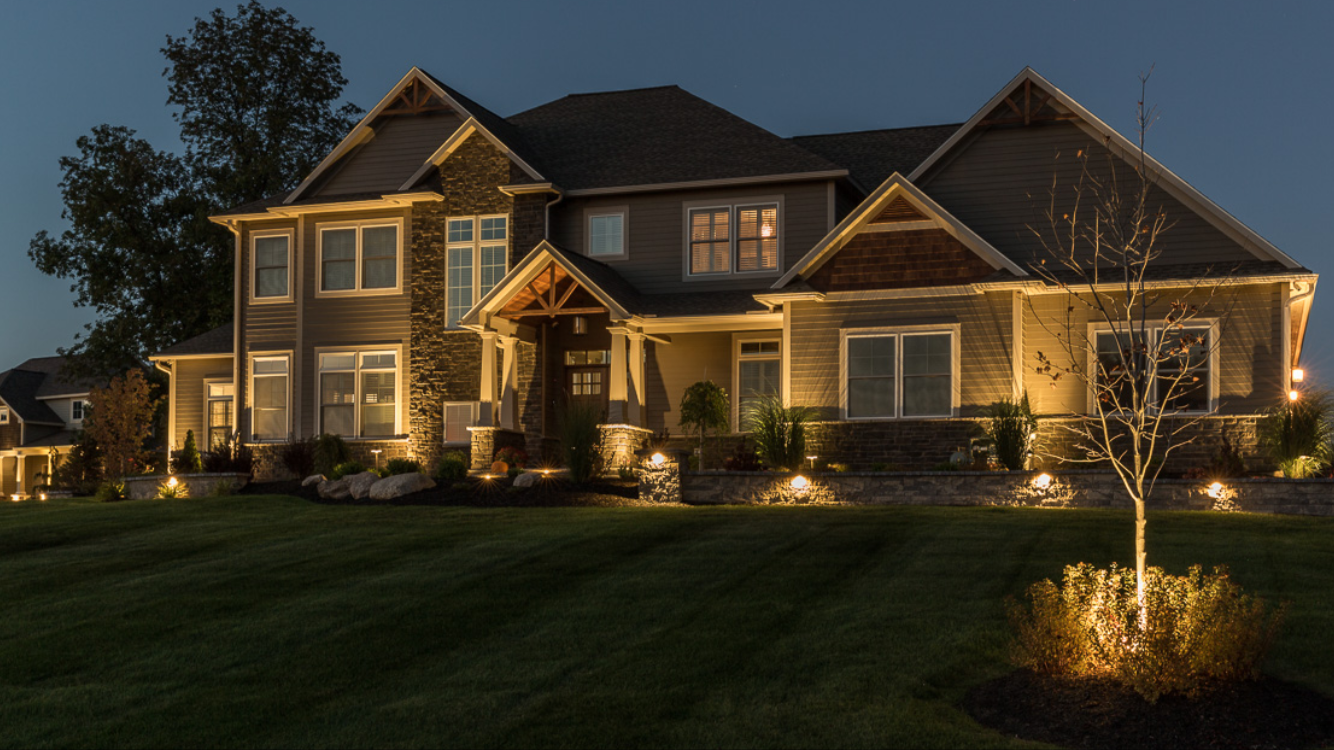
See our landscape construction work, read about our company, and check our guide to paver patio cost.
Frequently Asked Questions
What's the difference between a landscaper and a landscape contractor?
A landscaper often focuses on maintenance like mowing, mulching and cleanups. A landscape contractor builds things: patios, walls, pools, drainage, lighting and plantings. A design-build landscape contractor also designs the project in-house.
Does a landscape contract need to be in writing in New York?
Under New York's General Business Law, home improvement work, which the law defines to include patios, swimming pools and landscaping, generally requires a written contract when the price exceeds $500. A written contract protects both you and the contractor.
What certifications should a landscape contractor have?
Look for hardscape certifications such as ICPI and NCMA (now combined as the Concrete Masonry & Hardscapes Association), manufacturer programs such as Belgard Authorized Contractor and Techo-Pro, and an ISA Certified Arborist on staff for tree care.
How far ahead should I book a landscape contractor in Syracuse?
At Syracuse Lightscapes, design consultations are usually available within 2 to 4 weeks, and construction typically starts 8 to 16 weeks out. Starting design in late fall or winter is the best way to build early in spring.
Should I hire the lowest bid?
Not automatically. Compare what each proposal includes: excavation depth, base materials, drainage, materials, cleanup and warranty. A low price often means a thinner base or missing details that show up after a few winters.
Related Services
Talk to a Design-Build Team
Get one team for design, construction and lighting. Request your free consultation today.
Request Free ConsultationOr call 315-751-0540