When landscape lighting is working perfectly, your home looks its best every night. But over a few seasons, lights go out, beams drift off target, plants grow over fixtures and the far end of the run gets dim. Before long, the effect you paid for is gone.
Syracuse Lightscapes provides landscape lighting maintenance and repair in Syracuse and Central New York, for systems we installed and many we didn't. Here's what goes wrong and how regular maintenance keeps your yard glowing.
- Why lighting needs maintenance in CNY
- The most common problems
- Voltage drop explained
- What a maintenance visit includes
- Upgrading to LED and smart controls
- Simple things you can do
- Frequently asked questions
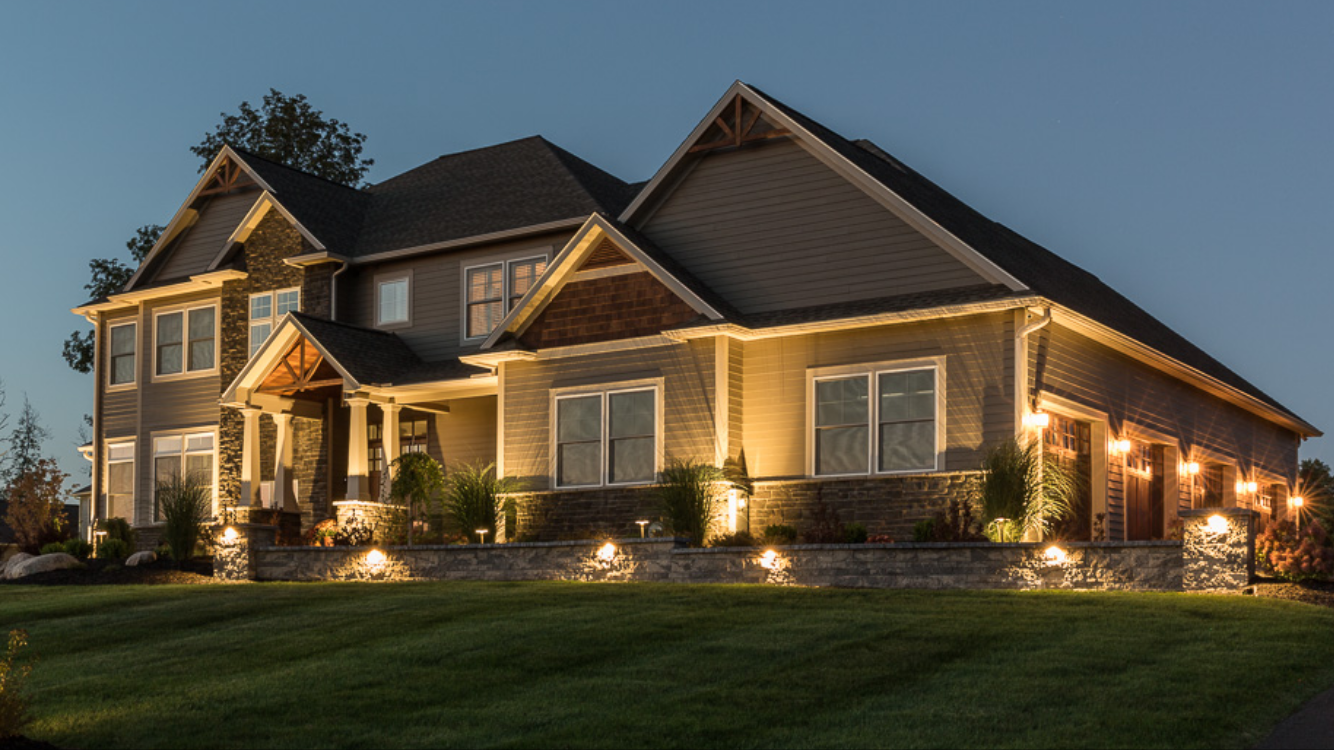
Why Lighting Needs Maintenance in CNY
- Snow and plows push fixtures over and bury them.
- Freeze–thaw cycles shift the soil, tilting fixtures and stressing connections.
- Plants grow: a light aimed perfectly at a young tree may be buried in shrubs a few years later.
- Mulch and edging cover fixtures or nick wires.
- Dirt and hard water cloud lenses and cut the light output.
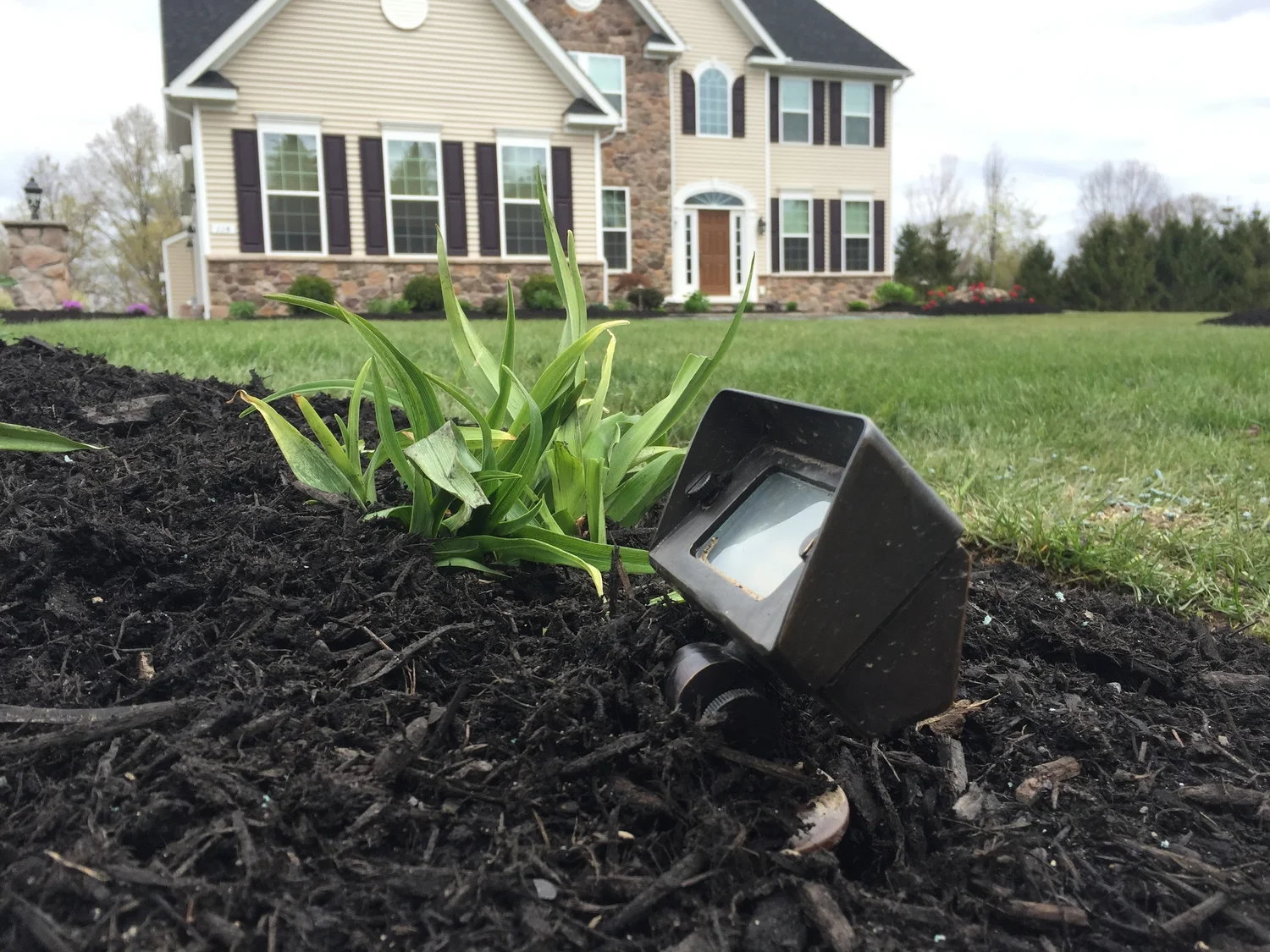
The Most Common Problems
| Symptom | Likely causes |
|---|---|
| One light out | Burned-out lamp, corroded socket or loose connection |
| A whole section out | Cut or damaged wire, failed splice |
| Entire system out | Tripped GFCI outlet, timer or photocell problem, transformer issue |
| Lights dim at the end of a run | Voltage drop from long wire runs or overloaded circuits |
| Lights on at the wrong times | Timer settings, a dirty or blocked photocell, or a smart control issue |
| Beams in the wrong place | Fixtures knocked or shifted, plants that have grown |
Voltage Drop Explained
Most landscape lighting runs on low voltage. As electricity travels along the wire, a little voltage is lost, and the longer the run or the more fixtures on it, the more is lost. Fixtures at the end of a long run get less voltage and glow dimmer or yellower than the ones near the transformer. A technician checks voltage at the fixtures and corrects it by rebalancing the wiring, using heavier wire or adjusting the transformer taps.
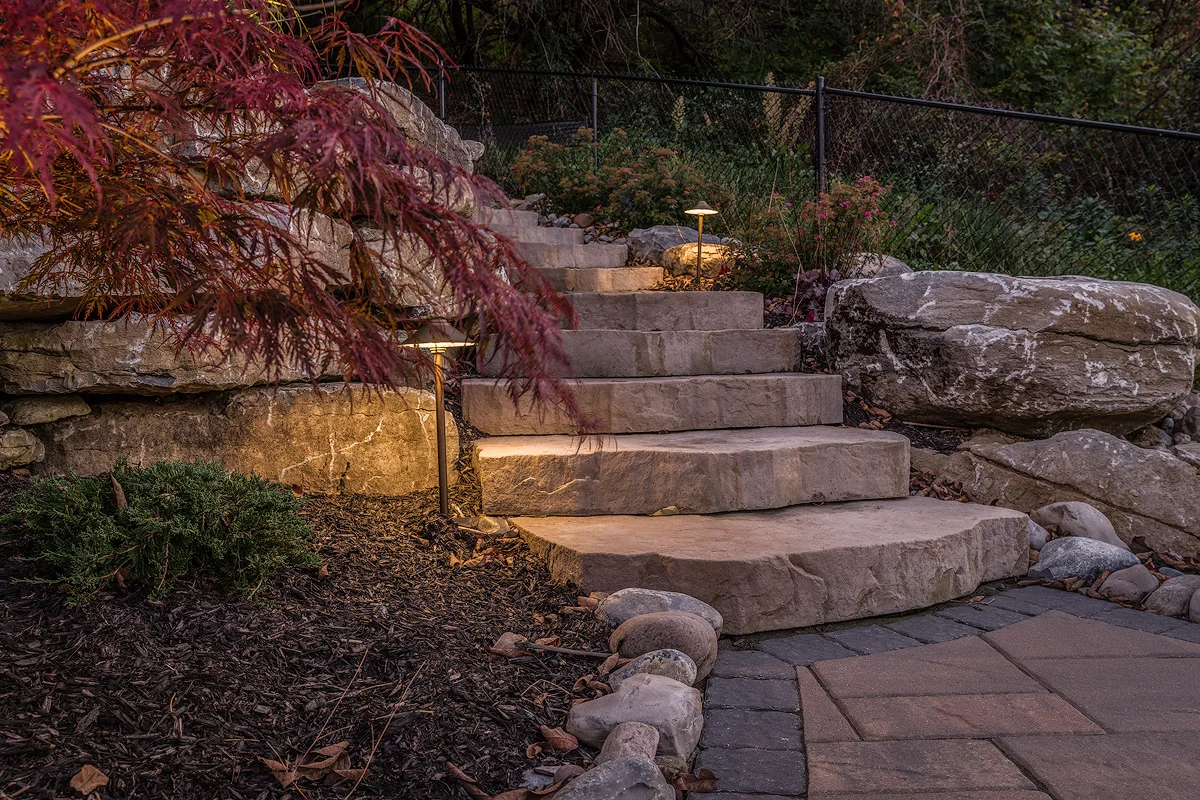
What a Maintenance Visit Includes
Our lighting maintenance service covers:
- Cleaning lenses as needed
- Re-positioning and re-aiming fixtures
- Checking voltage drop so every fixture operates properly
- Relocating fixtures as plantings mature
- Replacing lamps as needed
- Checking the transformer, timer and controls
Lighting maintenance is billed at $95 per man hour for the lighting technician, including travel and time on site, with parts billed at cost. Our pricing FAQ lists typical annual lighting maintenance and re-aiming at $250 to $2,500, depending on the size of the system.
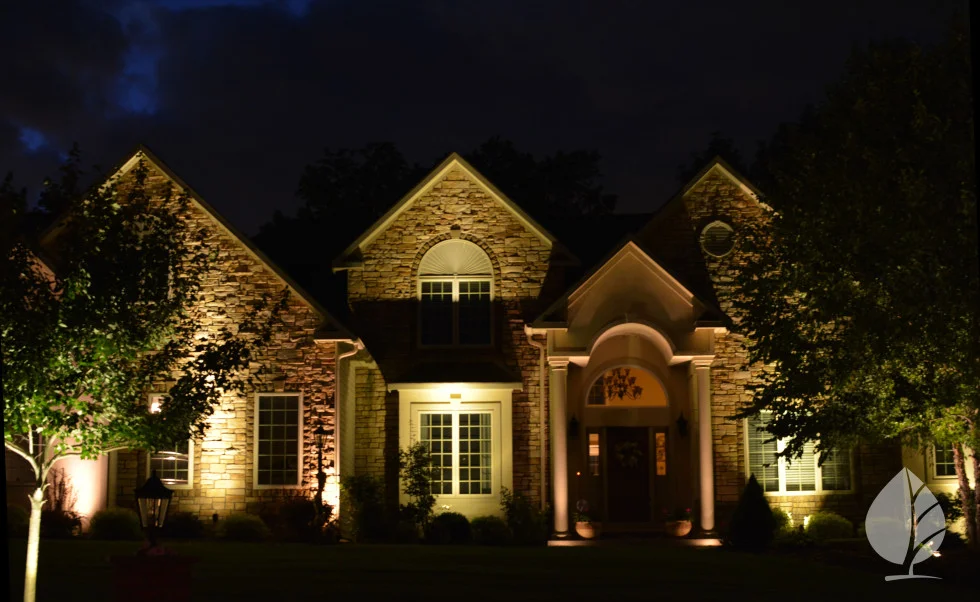
Upgrading to LED and Smart Controls
Older systems often use halogen lamps that burn out frequently and use more power. Switching to LED means far longer lamp life, lower power use and less load on the transformer, which can free up capacity to add lights. Smart controls let you set schedules, create zones and adjust lighting from your phone. Our pricing FAQ lists smart control and zoning add-ons at a typical $1,000 to $5,000.
Simple Things You Can Do
- Mark fixtures before snow so they can be avoided when shoveling or plowing.
- Keep mulch off fixtures when refreshing beds.
- Tell your landscaper or aeration crew where wires run.
- Check the GFCI outlet at the transformer first if everything goes dark.
- Walk the yard at night once a season and note what's out or off target.
Best time for service: Spring, after snow season and planting, is when fixtures are most likely to be out of place. Many homeowners also like a fall check before the holidays.
New to landscape lighting? Start with our low voltage landscape lighting guide, or see our maintenance contracts.
Frequently Asked Questions
Why are some of my landscape lights out?
The most common causes are a burned-out lamp, a cut or damaged wire from digging, edging or aeration, a corroded connection, a fixture knocked over by a mower or plow, or a timer, photocell or tripped GFCI outlet at the transformer.
Why are the lights at the end of the run dimmer?
That's usually voltage drop. On a low-voltage system, long wire runs or too many fixtures on one wire reduce the voltage that reaches the farthest fixtures. Checking voltage at the fixtures and correcting the wiring or transformer taps fixes it.
How often should landscape lighting be serviced?
Once a year is a good rule, ideally in spring after snow season and planting, when fixtures are most likely to have been knocked out of place or covered by mulch and growth.
What does landscape lighting maintenance cost?
Our lighting maintenance is billed at $95 per man hour for the lighting technician, including travel and time on site, with parts billed at cost. Our pricing FAQ lists typical lighting maintenance and re-aiming at $250 to $2,500 per year depending on system size.
Should I upgrade my old halogen lights to LED?
In most cases, yes. LED lamps last far longer and use much less power than halogen, which means fewer burned-out lights and less load on the transformer. We can evaluate whether to retrofit lamps or replace fixtures.
Related Services
Bring Your Lights Back
Repairs, re-aiming, LED upgrades and annual maintenance for landscape lighting across Central NY.
Request Free ConsultationOr call 315-751-0540