Central New York gets plenty of rain, heavy snow and a spring thaw that sends all of it moving at once. When water has nowhere to go, it ends up in the wrong places: soggy lawns, flooded beds, wet basements, washed-out mulch and icy patches on the walk every winter.
Syracuse Lightscapes designs and installs yard drainage solutions in Syracuse and Central New York, from downspout tie-ins to full site regrading. Here's how to spot a drainage problem and how it gets fixed.
- Signs of a drainage problem
- Start with grading
- Downspout tie-ins
- French drains and surface drains
- Swales, dry creek beds and rain gardens
- Drainage and hardscapes
- Typical drainage costs
- Frequently asked questions
Signs of a Drainage Problem
- Standing water or a soggy lawn for days after rain
- Water in the basement or along foundation walls
- Erosion, washed-out mulch or gullies on slopes
- Ice patches where downspouts empty onto walkways and driveways
- Patios and walkways that settle, heave or hold puddles
- Moss, mildew or dying plants in low spots
Start with Grading
The first line of defense is the shape of the ground. Soil should slope away from your house on every side. Building codes generally call for the ground to drop at least 6 inches within the first 10 feet from the foundation. Over the years, settling soil, new beds and added mulch can flatten or even reverse that slope. Regrading moves water away from the house before any pipe is needed.
Downspout Tie-Ins
A single downspout can release a huge amount of water in one storm, all in one spot. When it empties next to the foundation or across a walkway, it causes wet basements, erosion and winter ice. Tying downspouts into underground pipe carries that water to a safe outlet, such as a pop-up emitter in the lawn, a dry well or a rain garden.
Icy walkway every winter? Look up. A downspout draining across a path or driveway is one of the most common causes of dangerous winter ice, and one of the easiest to fix.
French Drains and Surface Drains
- French drains: a gravel trench with perforated pipe, wrapped in filter fabric, that collects groundwater from soggy areas or along a foundation.
- Catch basins: surface drains in low spots that collect water and send it through solid pipe.
- Channel drains: long, narrow grates at the edge of patios, driveways and garage doors.
Swales, Dry Creek Beds and Rain Gardens
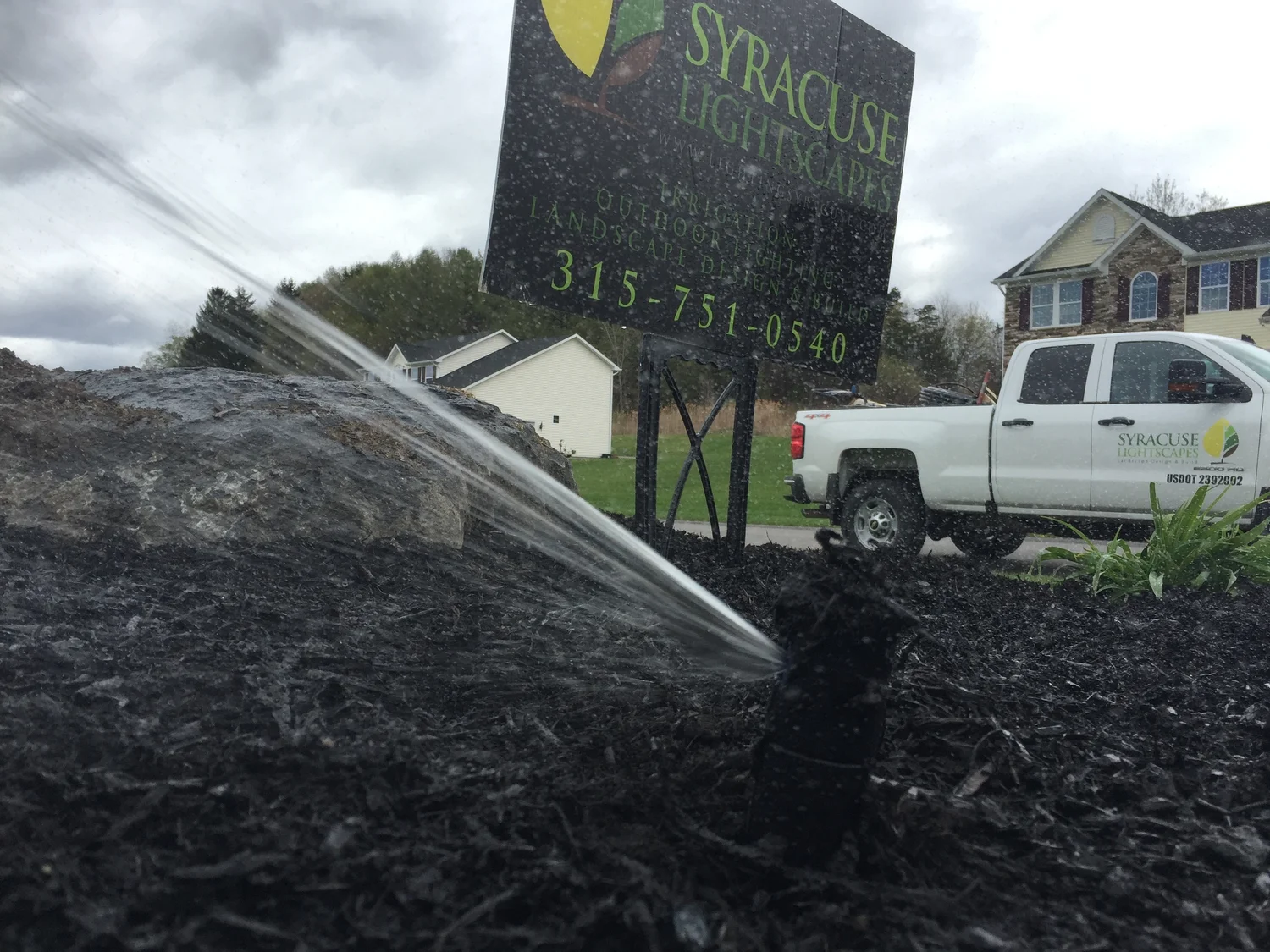
Not every solution needs to be hidden. A swale is a gentle, shallow channel that guides water across the lawn. A dry creek bed lined with river rock carries water during storms and looks like a natural landscape feature the rest of the time. A rain garden is a planted low area that collects runoff and lets it soak into the ground. These approaches also support the green infrastructure goals that Onondaga County promotes through its Save the Rain program.
Drainage and Hardscapes
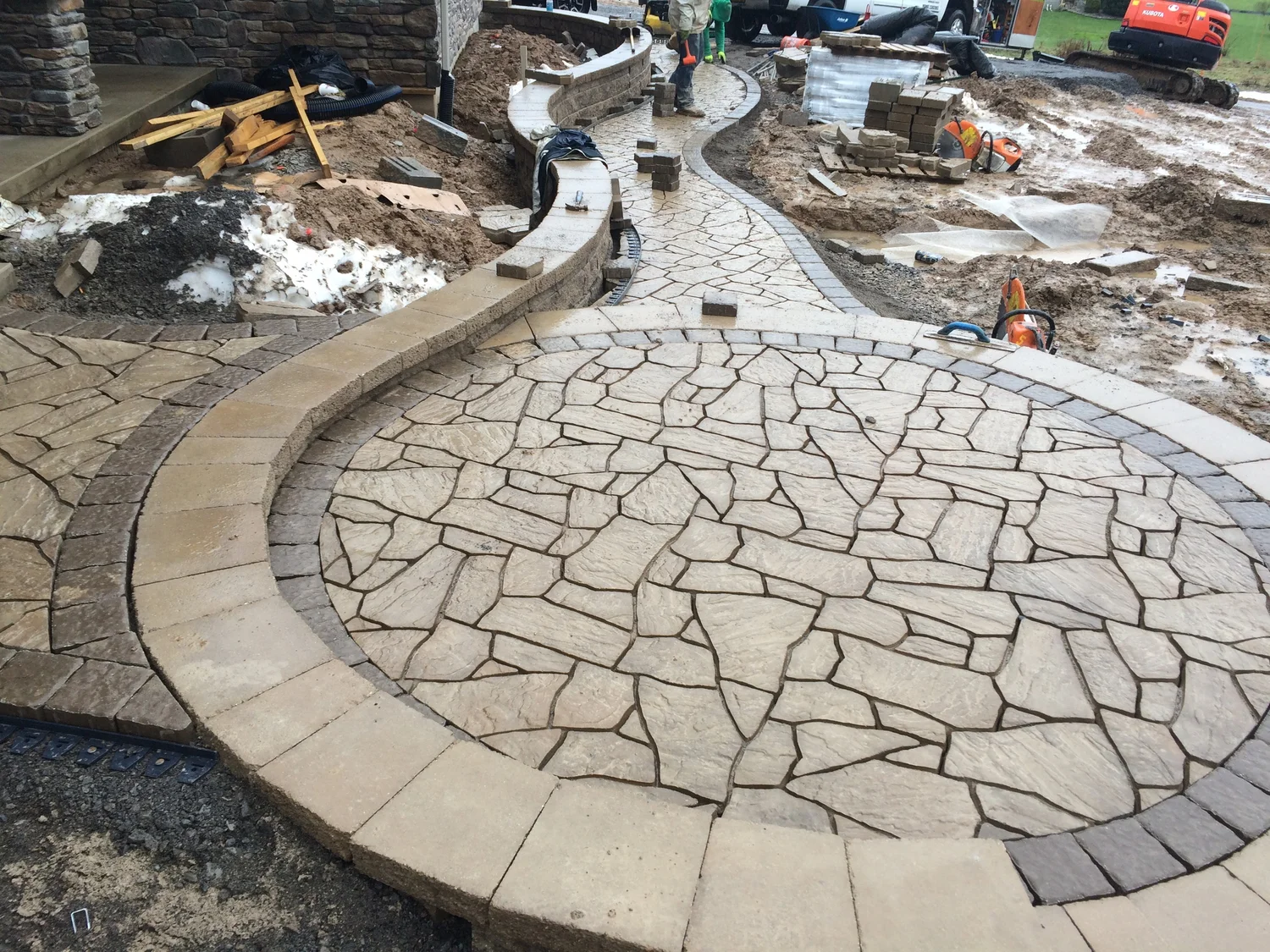
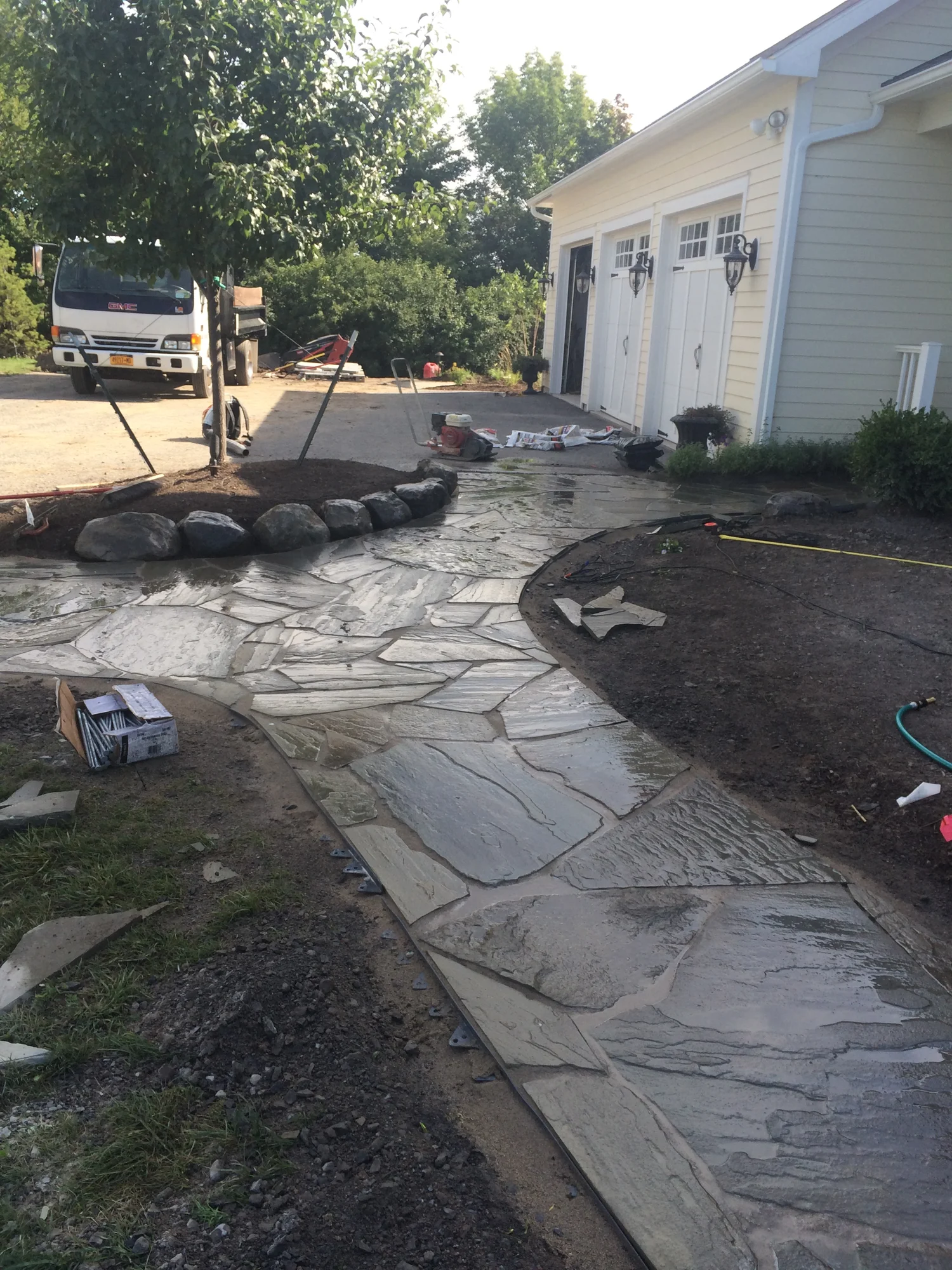
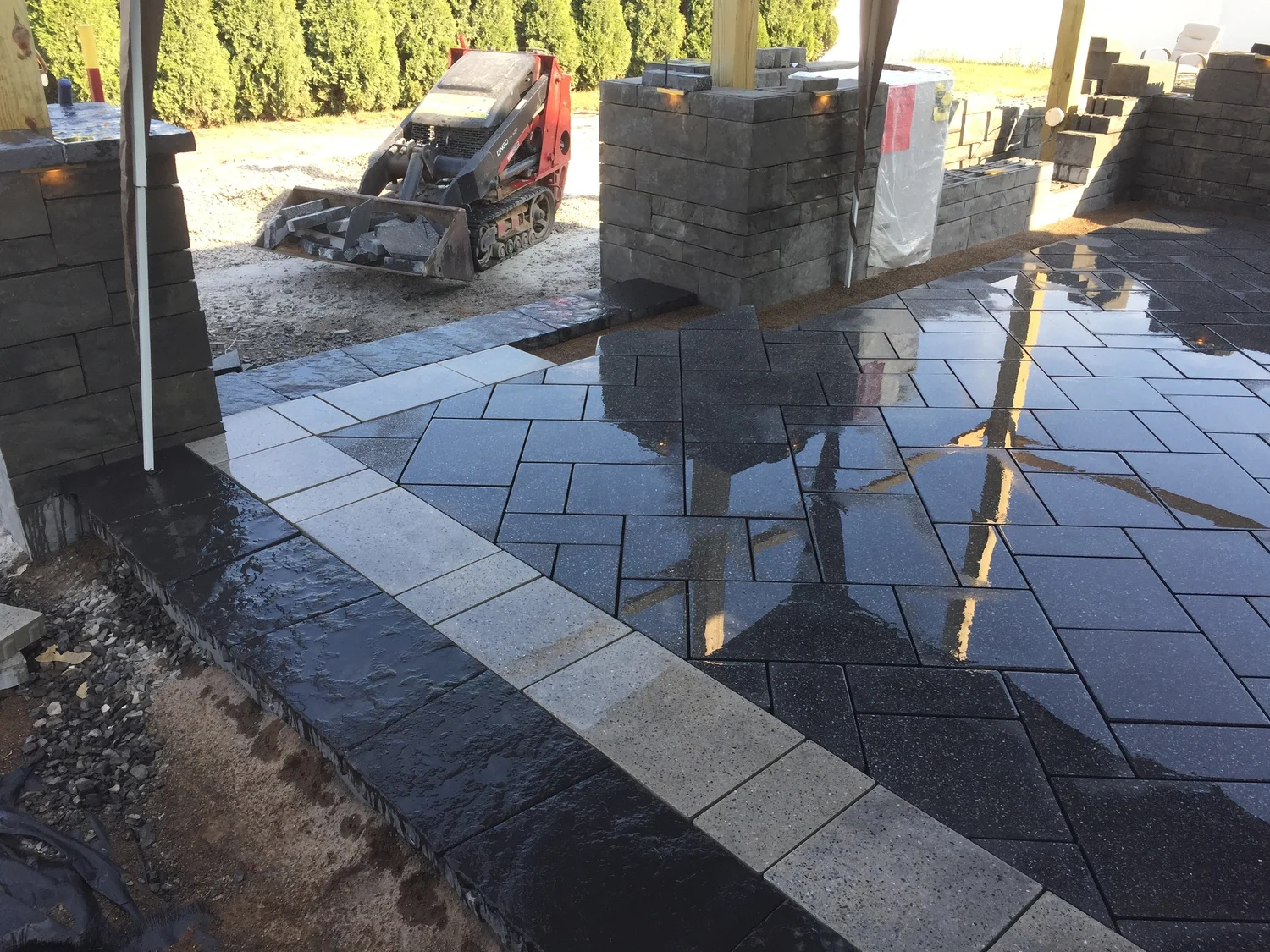
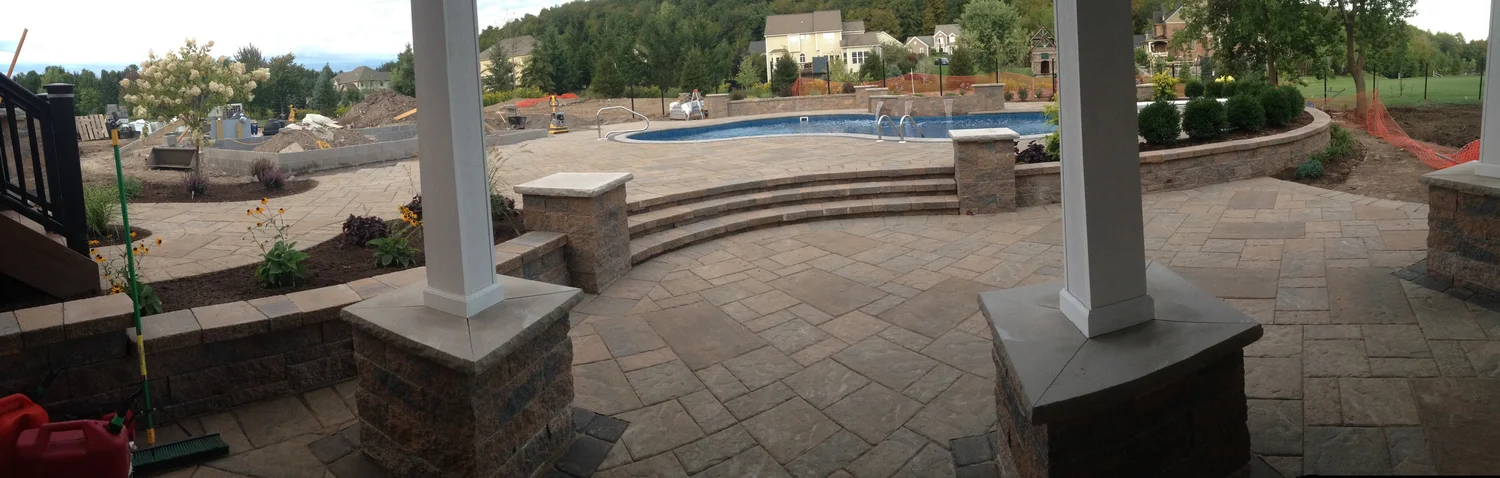
Patios, walkways and retaining walls change how water moves across your yard. That's why drainage is part of every hardscape design we build:
- Patios are pitched away from the house.
- Retaining walls get drainage stone and pipe behind them, so water pressure doesn't push them over.
- Pipe for downspouts is installed before the hardscape goes in.
Learn more in our guides to retaining walls, steep slope landscaping and fixing settled pavers.
Typical Drainage Costs
| Project | Typical range |
|---|---|
| Downspout tie-ins to underground and typical surface drains | $3,000 to $6,000 |
| Foundation or surface drainage | $3,000 to $25,000 |
| Full site regrading and excavation | $3,000 to $30,000 |
These are typical ranges from our pricing FAQ. Every property is different, so we start with a site visit to see where the water is coming from and where it can go.
Frequently Asked Questions
How do I know if my yard has a drainage problem?
Common signs are standing water or soggy lawn for days after rain, water in the basement, erosion or washed-out mulch, ice patches where downspouts empty onto walks, and patios or walkways that settle or hold water.
What is a French drain?
A French drain is a trench with perforated pipe surrounded by gravel and wrapped in filter fabric. It collects water from soggy areas or along a foundation and carries it to a safe outlet.
How much does yard drainage cost?
As typical ranges from our pricing FAQ: downspout tie-ins to underground and typical surface drains run $3,000 to $6,000, foundation or surface drainage $3,000 to $25,000, and full site regrading and excavation $3,000 to $30,000.
Can I send drainage water to my neighbor's yard?
No. A good drainage design moves water to a safe outlet on your own property, such as a pop-up emitter, dry well, swale or rain garden, without creating problems for neighbors.
When is the best time to fix drainage?
Fall and spring are both good times, and drainage should always be solved before building a new patio, walkway or landscape, since it's much easier to install pipe before the hardscape goes in.
Related Services
Stop Fighting Water
We'll find where the water is coming from and design a drainage solution that lasts.
Request Free ConsultationOr call 315-751-0540