A walkway is often the first thing guests notice and the path you use every day. A well-designed paver walkway connects the driveway to the front door, the house to the patio and pool, and the yard to the garden, and it does it safely in every season.
Syracuse Lightscapes designs and installs paver walkways in Syracuse and Central New York, with our own crews and no subcontracting. Here's what goes into one that looks good and lasts.
- Where walkways matter most
- Choosing materials
- Designing the walkway
- Making it easy to walk
- How we build walkways that last
- Lighting your walkway
- Typical costs
- Frequently asked questions
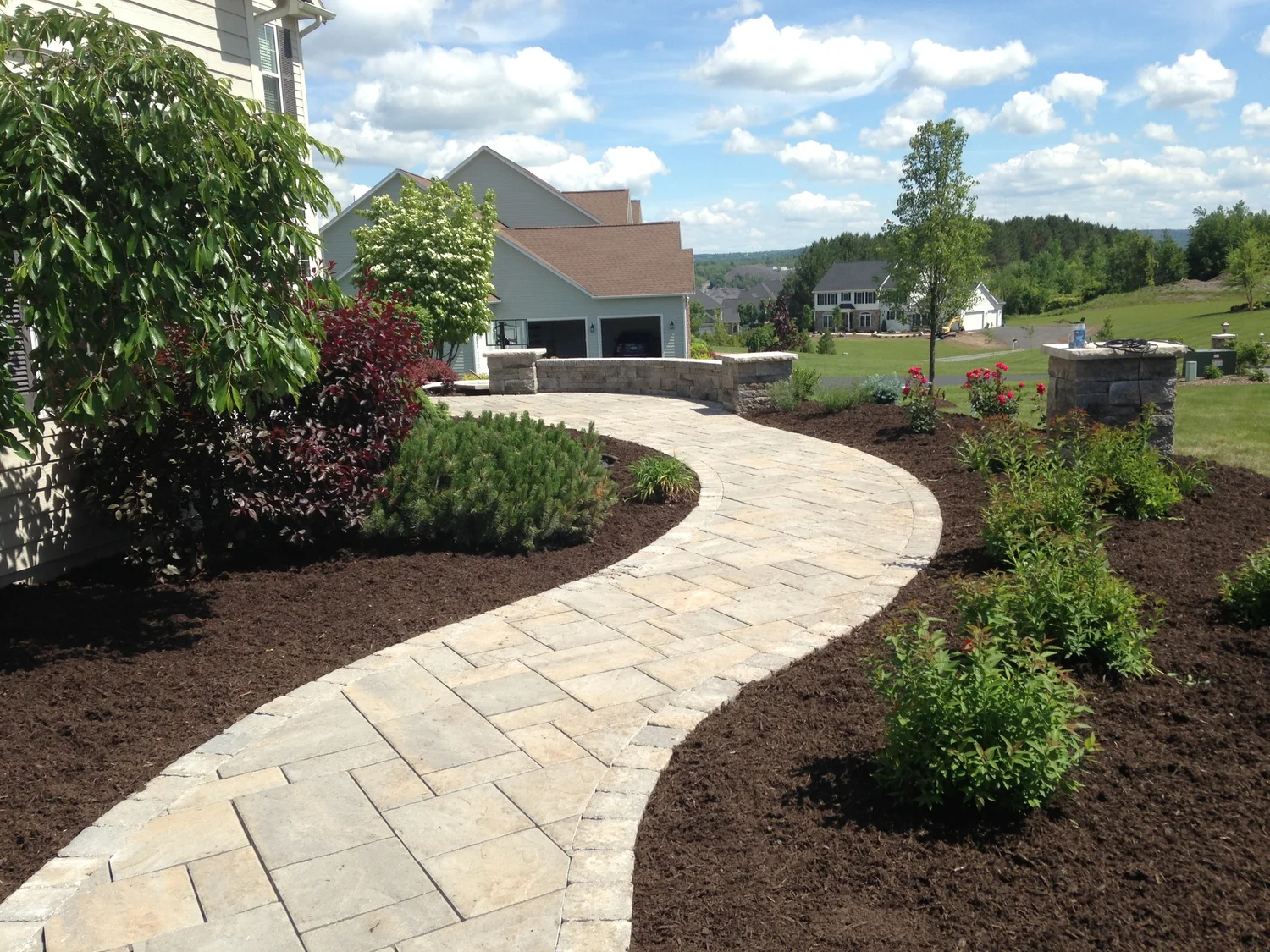
Where Walkways Matter Most
- Front entry: from the driveway to the front door, the walkway sets the tone for the whole house.
- Side yard: a clean path from the driveway or garage to the backyard.
- Backyard: connecting the house to the patio, pool, fire pit or garden.
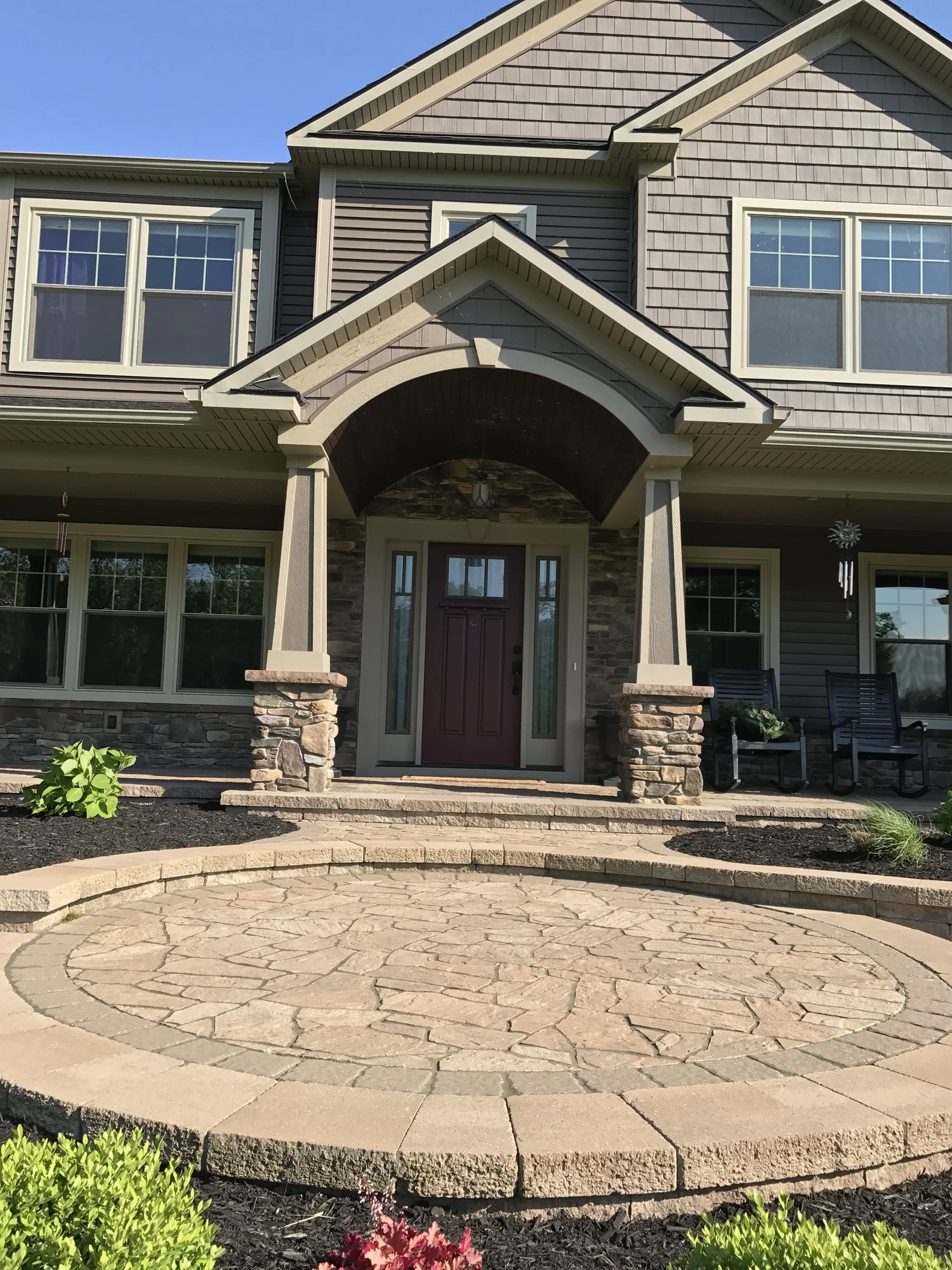
Choosing Materials
| Material | Look | Good to know |
|---|---|---|
| Interlocking concrete pavers | Wide range of colors, sizes and textures | Durable, easy to repair, pairs with borders and inlays |
| Natural stone pavers and bluestone | Classic, natural | Timeless look that suits traditional homes |
| Flagstone | Irregular, organic shapes | Suits informal gardens and natural landscapes |
| Porcelain pavers | Clean and modern | Consistent color and finish |
| Permeable pavers | Paver look with open joints | Lets water drain through the surface |
Designing the Walkway
- Width: about 4 feet for a front entry, so two people can walk side by side; about 3 feet for secondary paths.
- Straight or curved: straight walks suit formal homes, while gentle curves feel relaxed and lead the eye through the garden.
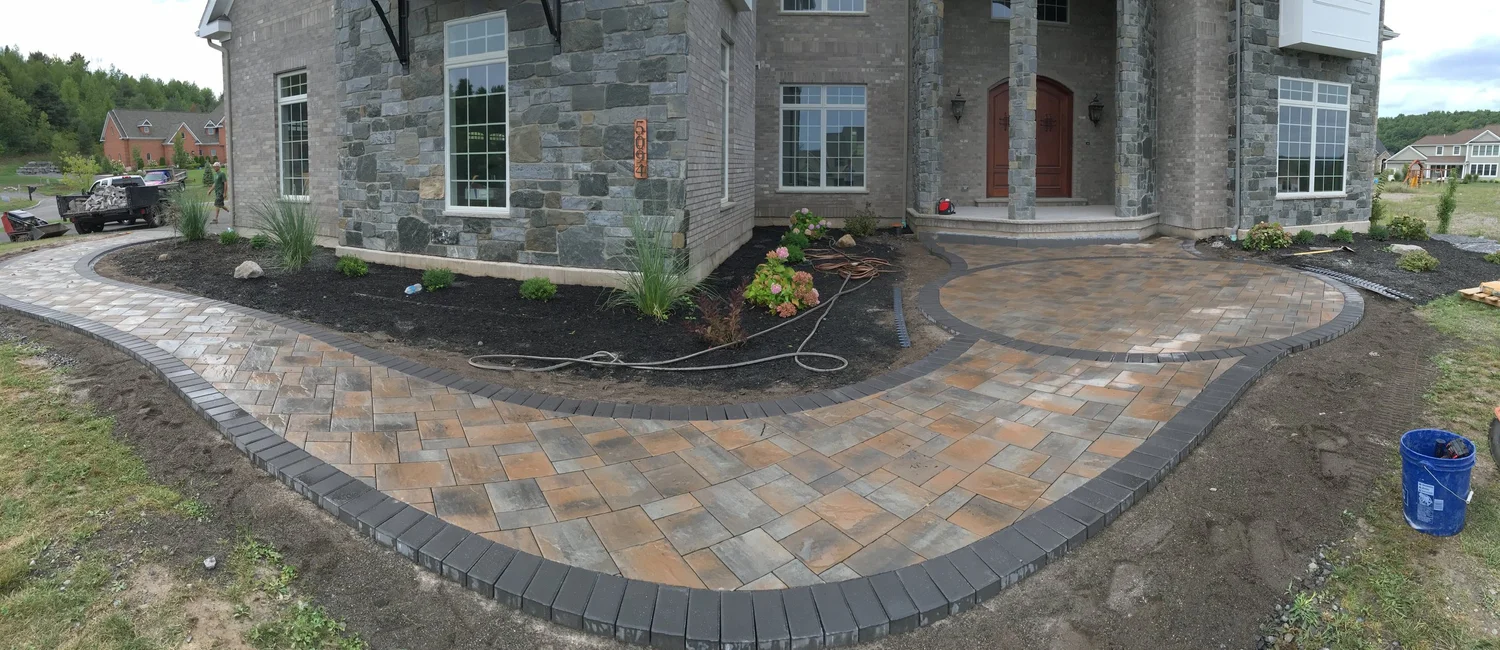
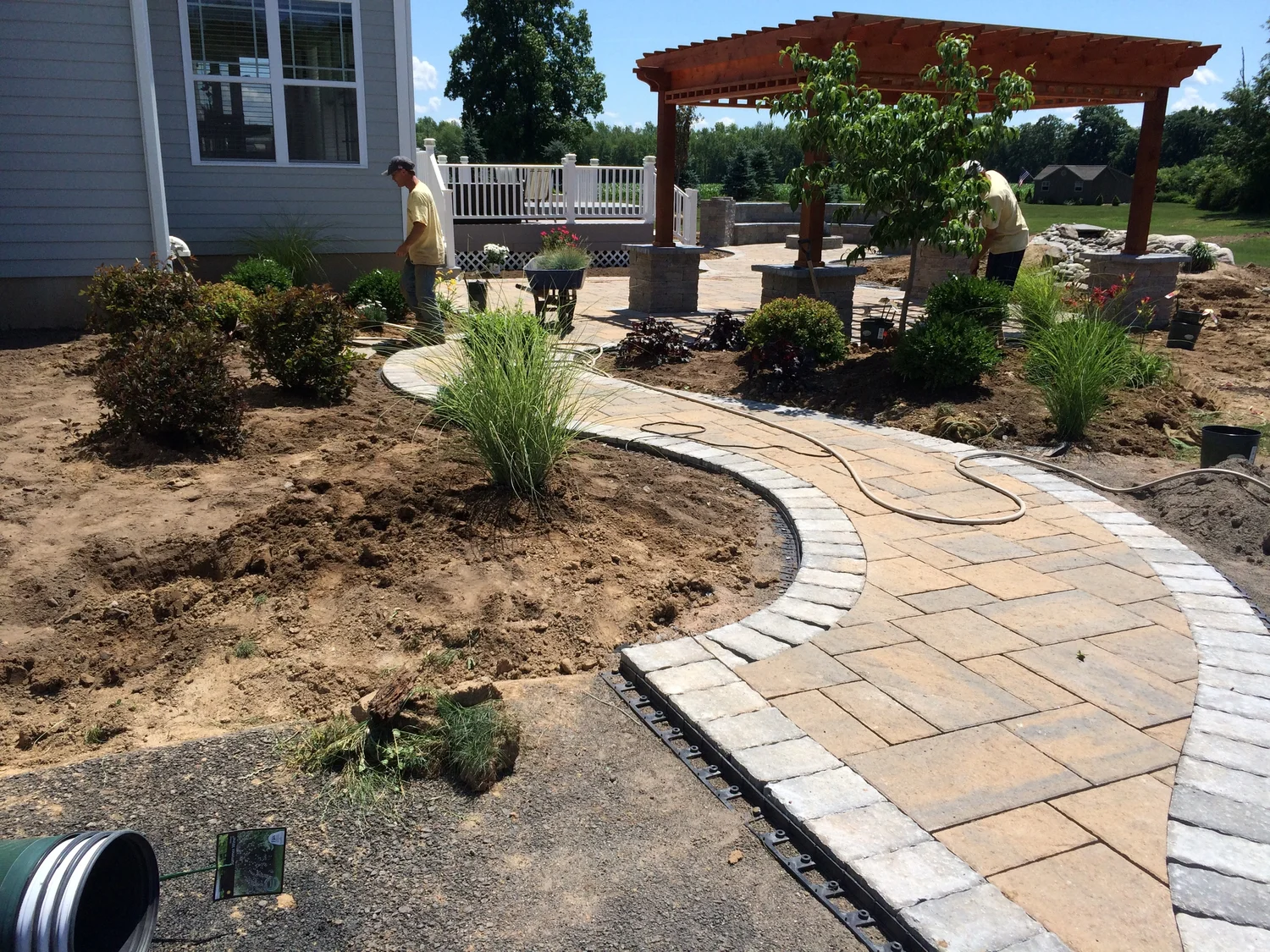
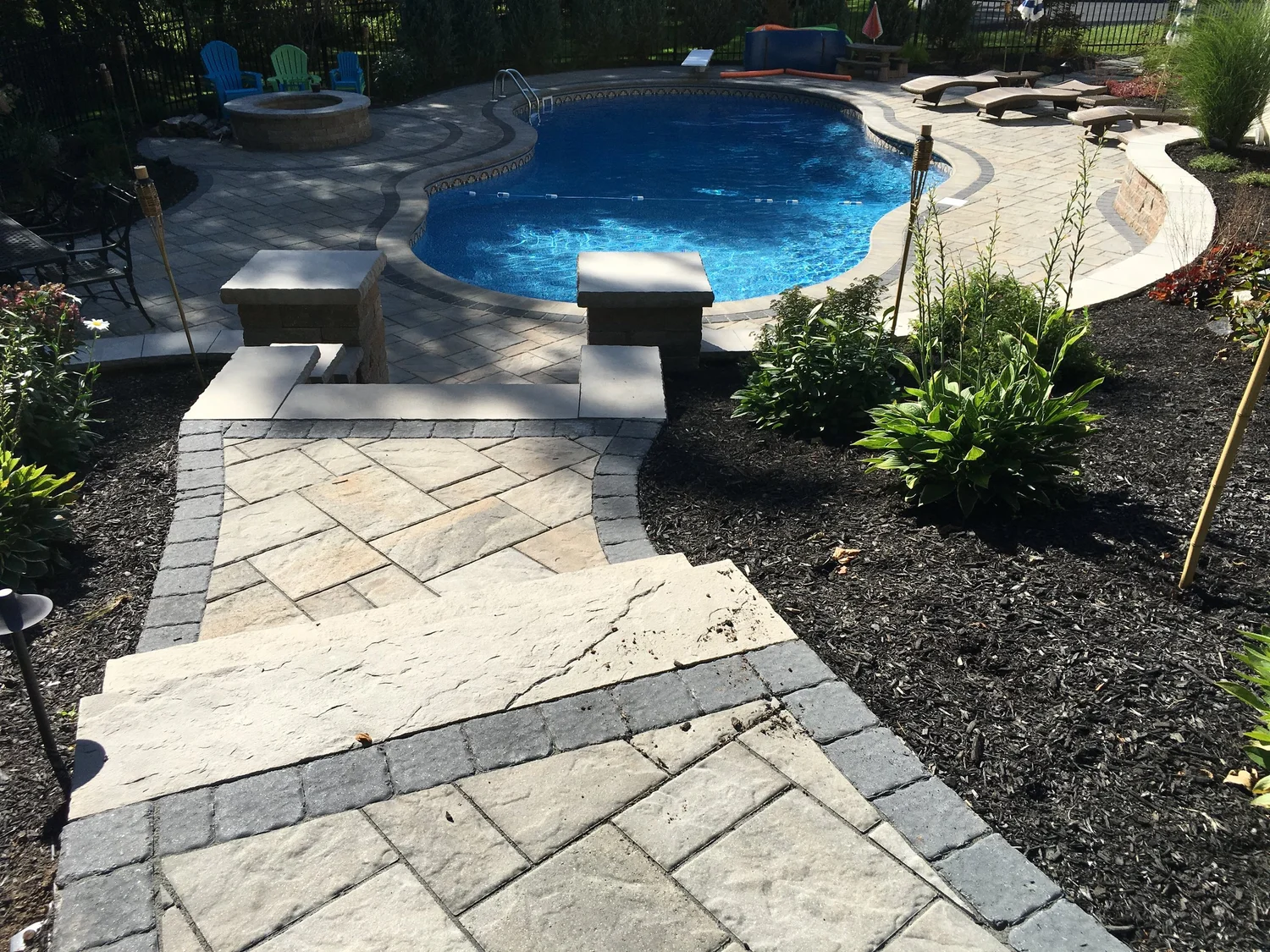
- Borders: a contrasting border frames the walkway and helps hold the field pavers in place.
- Landings: a wider landing at the front door gives room to greet guests.
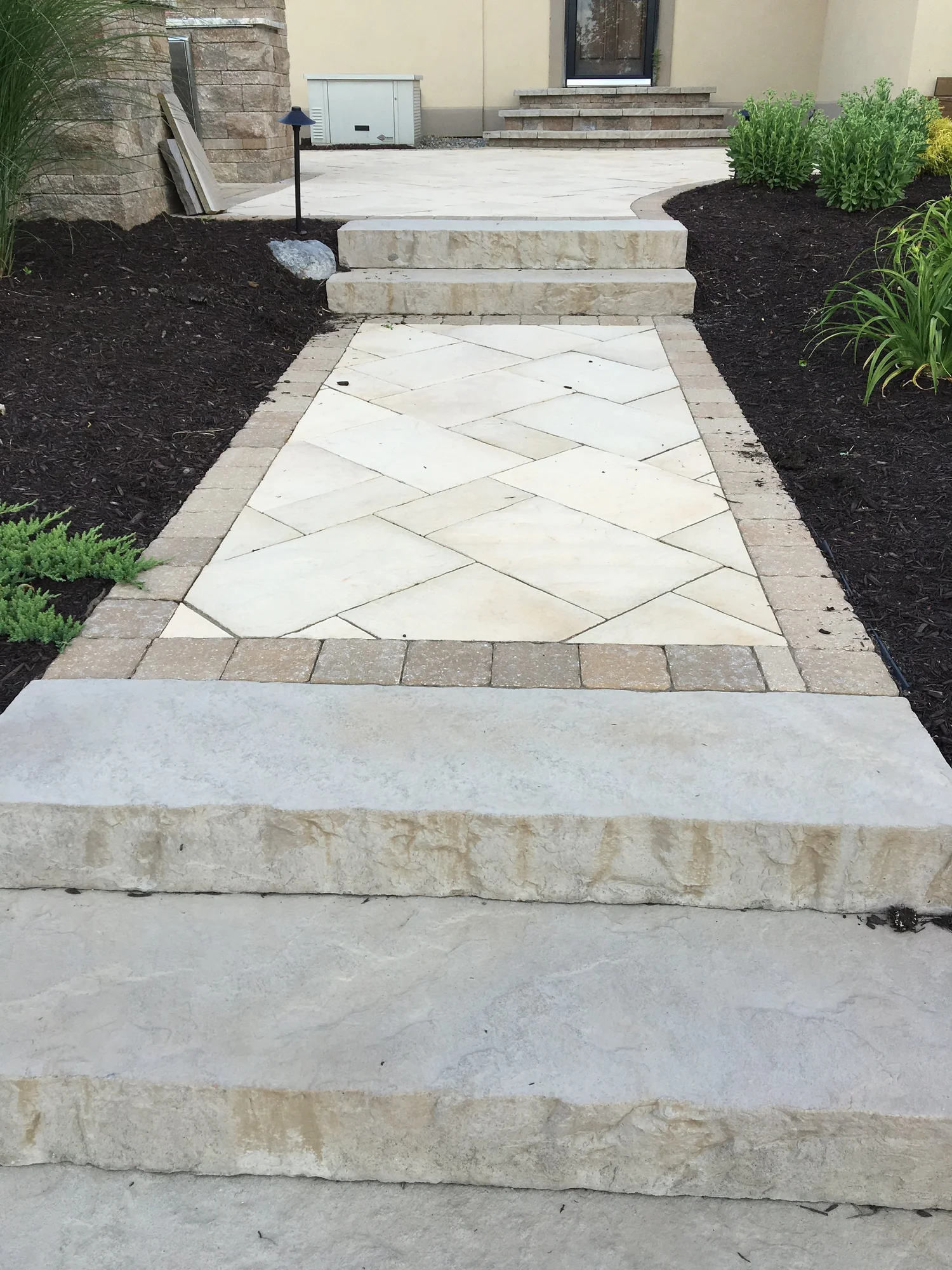
- Steps: where the grade changes, steps keep the walkway comfortable. See our guide to stone steps.
Making It Easy to Walk
A walkway should be comfortable for everyone, including older family members and visitors. Commercial accessibility standards are a useful guide, even at home:
- Gentle slope: under the ADA standards, the running slope of walking surfaces should not be steeper than 1:20 (5%), and the cross slope not steeper than 1:48 (about 2%).
- Clear width: accessible walking surfaces are at least 36 inches wide.
- Smooth surface: ICPI guidance limits height differences between pavers to 1/8 inch on pedestrian access routes.
- Level landings at doors, and steps or a gentle grade where the ground changes.
How We Build Walkways That Last
- Layout and utilities: we mark the walkway and have buried utilities located before digging.
- Excavation: soil is removed to make room for the base, bedding layer and pavers.
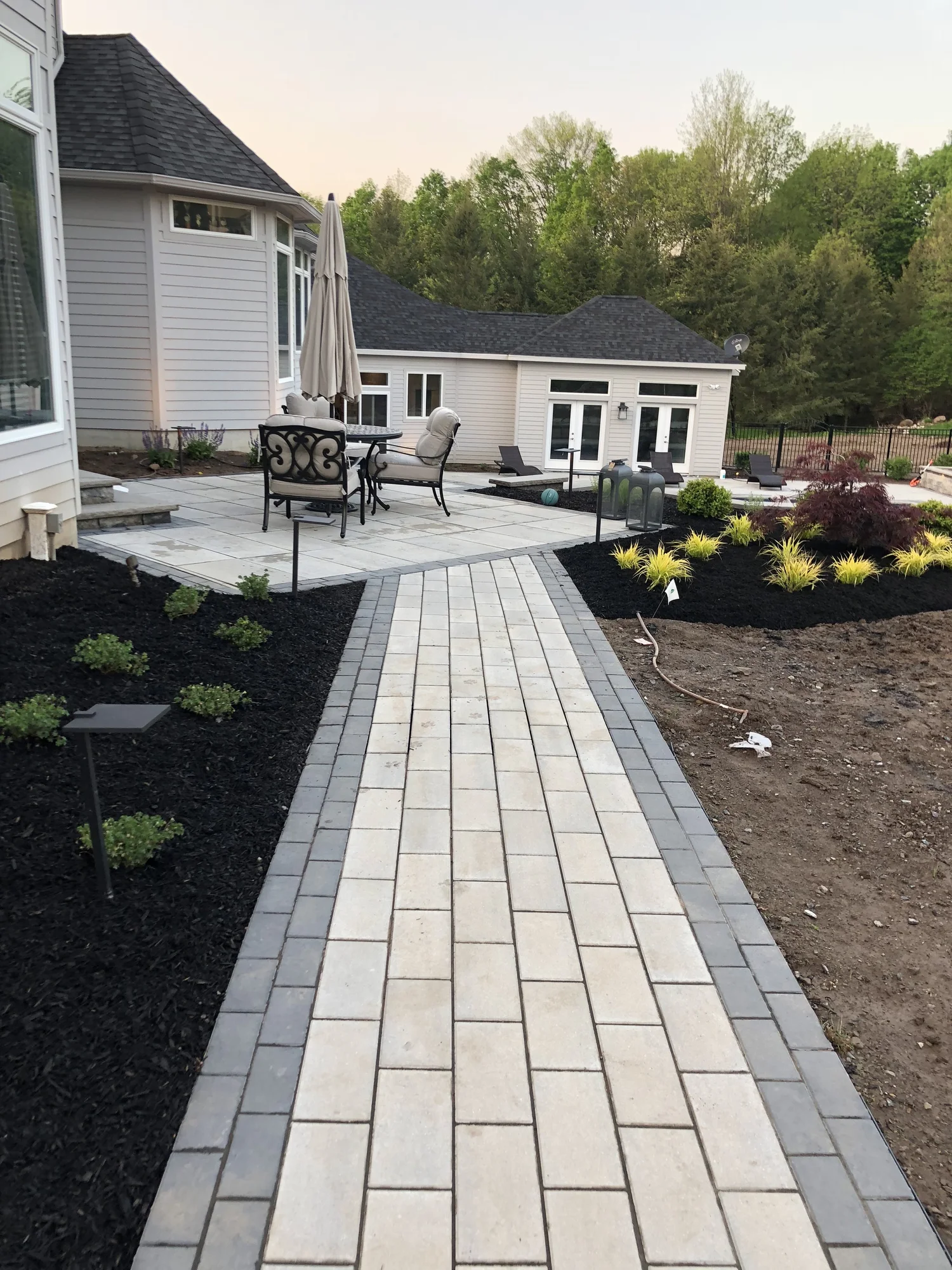
- Compacted base: ICPI recommends a minimum 4-inch aggregate base for walkways and notes that colder climates may need more. We build bases for Central New York's soils and freeze-thaw cycles, compacted in layers.
- Bedding layer: a screeded bedding layer about 1 inch thick.
- Pavers and edge restraint: pavers are laid in pattern, and edge restraint holds every unsupported edge.
- Compaction and jointing: the pavers are compacted and joints are filled with jointing sand.
- Drainage: the walkway is pitched so water runs off instead of pooling and freezing.
Our team includes ICPI, NCMA, Belgard Authorized and Techo-Pro certified installers. Keep your walkway looking new with our paver cleaning, sealing and repair guide.
Lighting Your Walkway
Path lights make a walkway safe after dark and show off the pavers and plantings. Plan wiring before the walkway is installed. Read our guide to low-voltage landscape lighting.
Typical Costs
| Project | Typical range |
|---|---|
| Walkways and front entrance hardscape | $5,000 to $50,000 |
| Driveway, path and tree lighting | $3,000 to $15,000+ |
These are typical ranges from our pricing FAQ. See more ideas in our guides to front yard landscaping and paver patio costs.
Frequently Asked Questions
How wide should a paver walkway be?
For a front entry, about 4 feet lets two people walk side by side. Secondary paths can be narrower, about 3 feet. Accessibility standards use 36 inches as a minimum clear width.
How deep is the base under a paver walkway?
The Interlocking Concrete Pavement Institute recommends a minimum 4-inch compacted aggregate base for walkways and patios, and notes that colder climates may require thicker bases. We size the base for the soil and Central New York's freeze-thaw cycles.
How much does a paver walkway cost in Syracuse?
As a typical range from our pricing FAQ, walkways and front entrance hardscapes run $5,000 to $50,000. Length, width, material, steps, landings, borders and lighting all affect the price.
What keeps pavers from shifting?
A compacted base, a properly screeded bedding layer, an edge restraint along every unsupported edge, and full joints of jointing sand. Together they lock the pavers in place.
Can a walkway be made easier to walk for older visitors?
Yes. Gentle slopes, wide paths, level landings at doors, smooth joints, good drainage and path lighting all make a walkway safer and easier to use.
Related Services
Plan Your Walkway
From front entries to backyard paths, request a design consultation with our team.
Request Free ConsultationOr call 315-751-0540